


Why Foreigners Come to China to Learn Kung Fu?
You’ve seen the movies and practiced the forms at your local gym, but you still feel like something is missing.
That “something” is the spirit of the Songshan Mountain and the wisdom of authentic Wushu masters.
Every year, thousands of students leave everything behind for a martial arts pilgrimage to the East. But why? Is it the allure of traditional Chinese martial arts, or is it the search for something deeper?
The truth is, a full-time Kung Fu school in China offers a level of physical and mental transformation that you simply cannot replicate in the West. It’s a journey defined by eating bitterness, mastering Qi Gong and meditation, and living the martial arts philosophy at its source.
In this guide, I’m going to show you exactly why cultural immersion in China is the ultimate path for any serious practitioner.
Let’s dive right in.
The Quest for Authenticity: Learning from the Source
Many practitioners start their journey in local gyms back home, yet they eventually hit a wall. They realize that while the movements are there, the essence is missing. I see students travel across the globe because they crave Traditional Chinese Martial Arts in its purest form—undiluted by Western commercialization. Coming to China is a martial arts pilgrimage to the root of the tree, where the knowledge hasn’t been filtered through multiple layers of translation.
Lineage and Heritage: Training Under True Masters
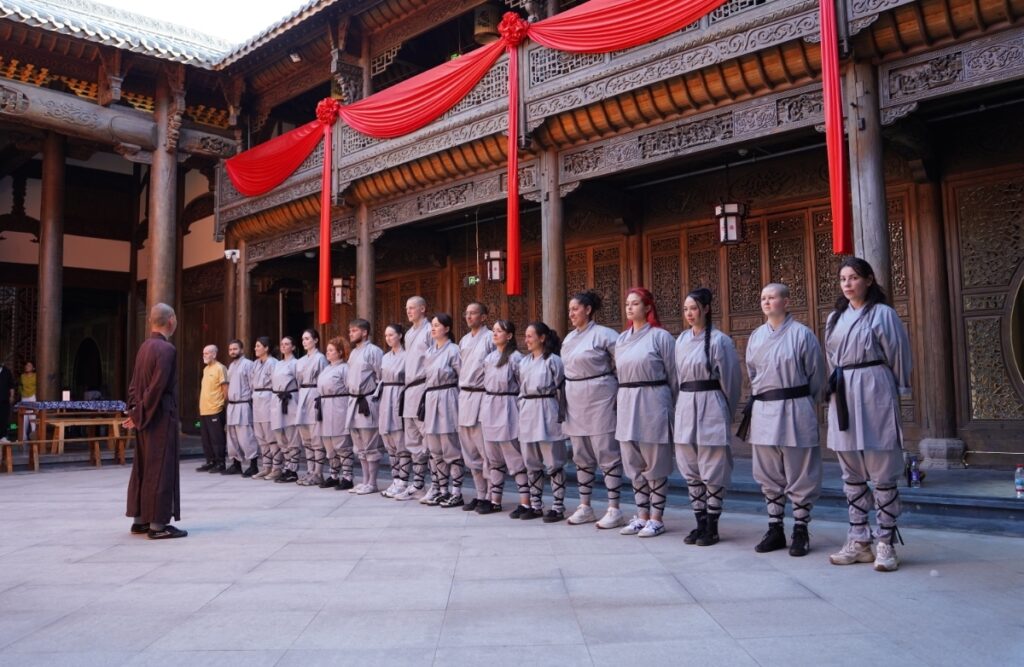
In China, you aren’t just learning from an instructor; you are connecting to a lineage that spans centuries. Our masters have spent their entire lives preserving styles passed down through generations of warriors and monks.
- Direct Transmission: Knowledge is handed down from master to student, ensuring the “flavor” of the style remains intact.
- Historical Continuity: You train in the same geographical regions where these styles were birthed and perfected.
- Unbroken Traditions: Accessing techniques that are often kept “inside the family” and rarely seen in commercial Western schools.
The “Shifu” Bond: More Than Just a Coach
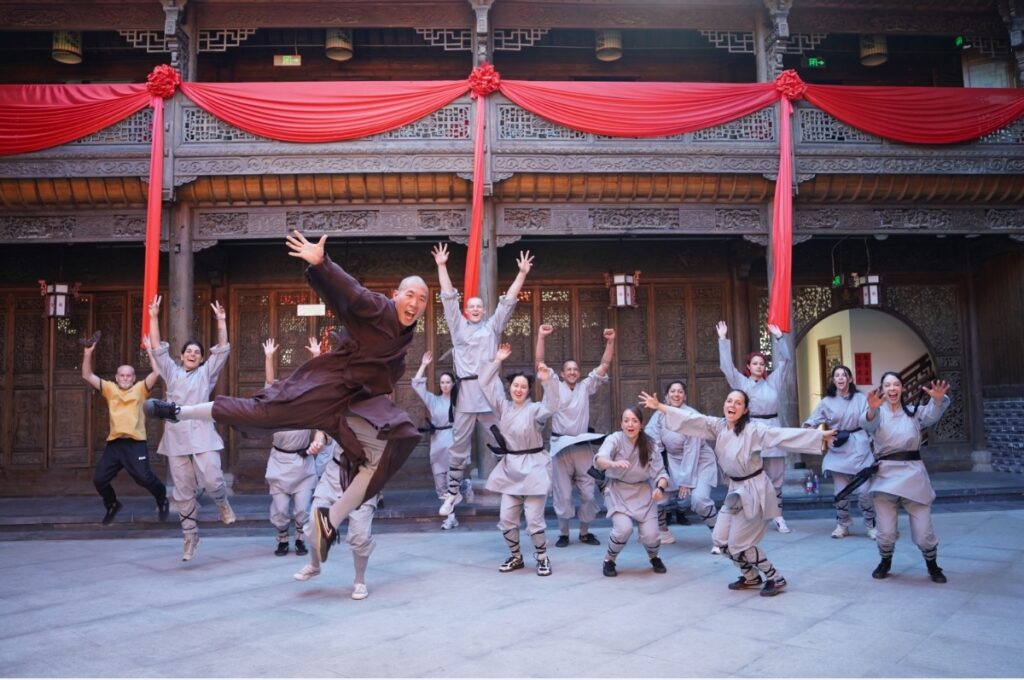
The relationship between a student and a Shifu is the cornerstone of authentic training. Unlike the transactional nature of a Western gym membership, this is a traditional mentor-disciple bond.
- Life Guidance: A Shifu doesn’t just correct your stance; they shape your character and discipline.
- Mutual Respect: The bond is built on loyalty, hard work, and a shared commitment to the art.
- Personalized Growth: Training is tailored to your specific physical and mental hurdles, moving beyond a “one-size-fits-all” curriculum.
Standardization vs. Tradition: Finding Depth
In the West, martial arts are often treated as a “sport” or a fitness trend. In China, we focus on the depth that exists beyond the surface-level performance.
- Beyond the “Sport” Version: While modern Wushu focuses on aesthetics, traditional training emphasizes internal power and practical application.
- Combating Dilution: Many international schools prioritize belts and rankings; we prioritize the actual mastery of the skill.
- Holistic Depth: You learn the “why” behind every movement, connecting physical strikes to the underlying philosophy and energy work.
Cultural Immersion: More Than Just Martial Arts
For most of our students, the draw of China goes far beyond physical combat. They come here to live the philosophy that most people only read about in books. In a traditional setting, Zen Buddhism (Chan) and Taoist principles aren’t just abstract concepts; they are woven into the fabric of daily life, from the way we eat to the way we breathe during a grueling stance session. This lived experience is a primary reason why foreigners like to come to China to learn Kung Fu.
Living the Philosophy and Language
True mastery requires understanding the “why” behind the “how.” By training at the source, you connect Kung Fu terminology directly to Chinese history and thought. When a master explains a movement through the lens of traditional philosophy, the technique takes on a new dimension of power and intent.
- Philosophical Integration: Daily practice is a form of moving meditation, emphasizing the balance of Yin and Yang.
- Historical Context: Every form (Taolu) tells a story of a specific era or lineage, providing a deep sense of cultural immersion in China that cannot be replicated in a Western strip-mall dojo.
- Language Connection: Learning the original names of techniques helps students grasp the imagery and mechanics intended by the ancient masters.
The Holistic Kung Fu Lifestyle
We provide an environment where you can escape the constant noise of Western digital distractions. This “Kung Fu life” is a total reset for the nervous system. By stripping away the clutter of modern life, students can focus entirely on their personal growth and the nuances of the top 10 most popular Chinese martial arts.
| Aspect | Western Training | Traditional Chinese Training |
|---|---|---|
| Focus | 1-2 hours after work | 24/7 immersion in the lifestyle |
| Environment | Modern gym/Commercial space | Historic temples and sacred mountains |
| Philosophy | Often secondary or ignored | Central to every movement and meal |
| Diet | Standard Western diet | Clean, traditional fuel for recovery |
This holistic approach ensures that when you leave, you aren’t just taking home new fighting skills—you’re taking home a disciplined mindset and a deeper understanding of human potential.
Physical and Mental Transformation Through Kung Fu
Foreigners choose to train in China because the physical and mental shift happens faster here than anywhere else in the world. In a Western setting, martial arts is often a hobby; in China, it is a total lifestyle overhaul that demands everything from you.
The Rigor of Full-Time Training
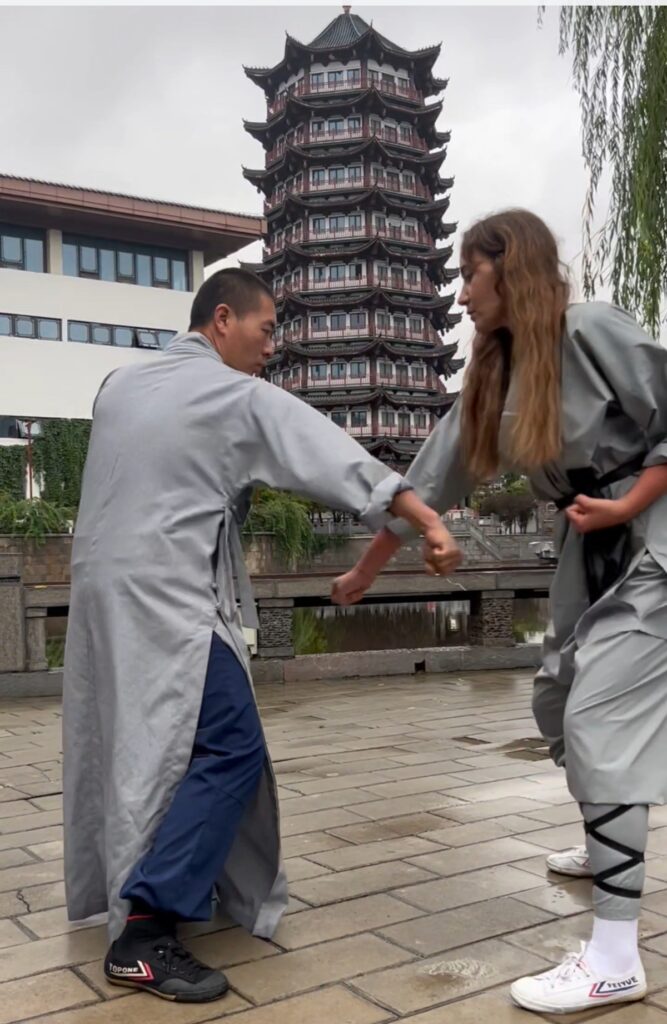
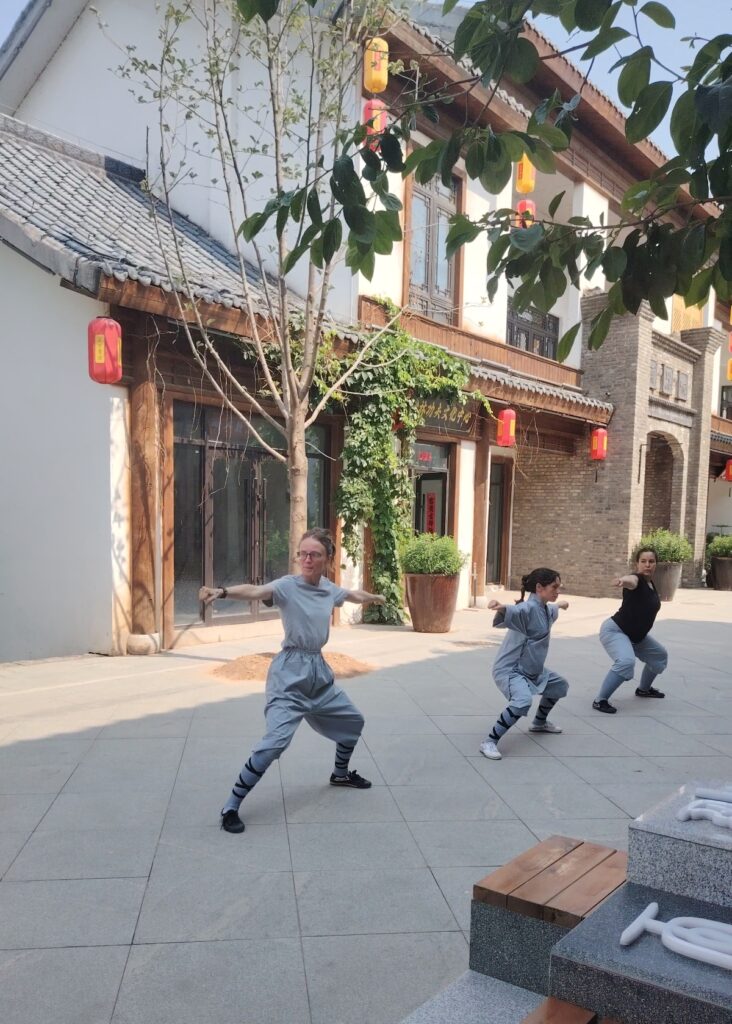
The primary reason for the rapid progress seen in China is the sheer volume of practice. Students engage in a six-day-a-week schedule that starts at sunrise. This immersion forces the body to adapt, turning what would be years of part-time practice into months of high-level skill acquisition.
- Accelerated Progress: Constant repetition builds muscle memory at an elite level.
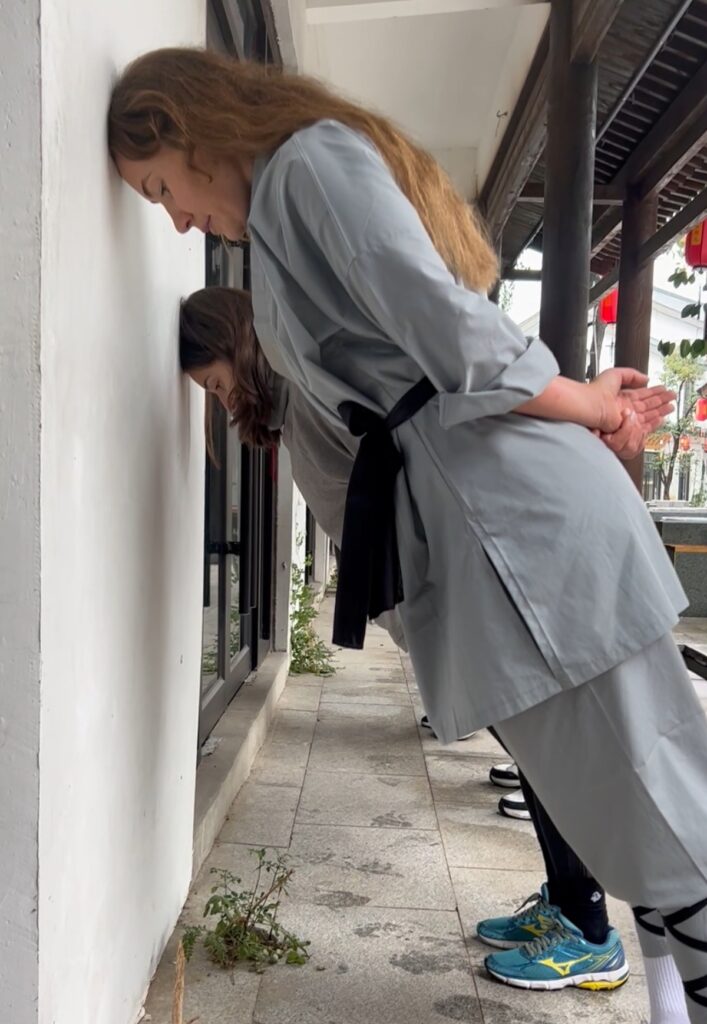
- Conditioning: Training on traditional grounds hardens the body in ways a modern gym cannot.
- Discipline: Following a strict temple or school schedule eliminates the “choice” to be lazy.
Balancing Internal and External Power
Authentic Traditional Chinese Martial Arts are not just about throwing punches. We focus on the harmony between explosive external movements and internal energy cultivation. Many students find that they can learn Tai Chi in China to complement their high-impact training, providing a necessary balance for the nervous system.
- Qi Gong and Meditation: These practices help students recover faster and manage the stress of intense physical work.
- Internal Arts: Developing “soft” power through a Tai Chi retreat ensures long-term joint health and internal strength.
- Explosive Wushu: Mastering the “Fajin” (explosive power) used in traditional forms.
Building Mental Resilience: “Eating Bitterness”
The Chinese concept of “Eating Bitterness” (Chiku) is a major draw for those looking to test their limits. It refers to the ability to endure hardship and persevere through physical and mental exhaustion. This “bitterness” is what forges the martial arts discipline that foreigners value so highly.
- Mental Clarity: Stripping away modern distractions allows for a level of focus rarely achieved in the West.
- Emotional Fortitude: Overcoming the desire to quit builds a “warrior spirit” that applies to career and personal challenges.
- Stress Management: Learning to stay calm under the pressure of rigorous Shaolin Kung Fu training.
Training in Sacred Landscapes: The Power of Place
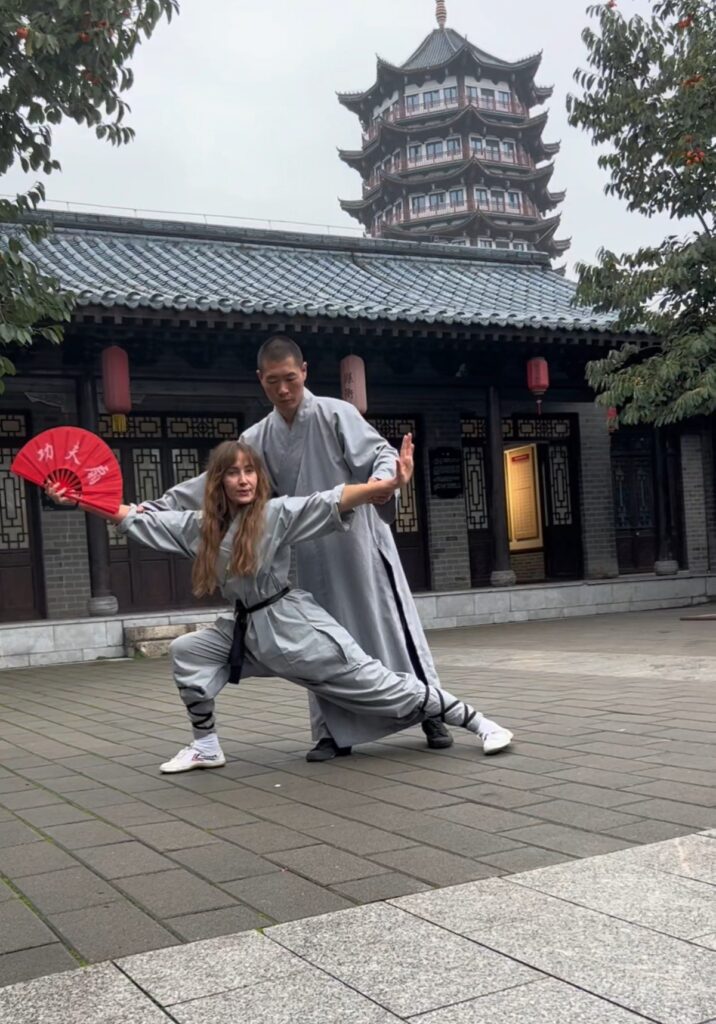
When people ask why foreigners like to come to China to learn Kung Fu, the environment is often the deciding factor. Training isn’t just about the physical movements; it’s about where those movements happen. Stepping onto the grounds of a traditional school feels like stepping back in time, far removed from the noise of modern life.
The Psychological Impact of Songshan Mountain
The Songshan Mountains are not just a backdrop; they are the spiritual heart of martial arts history. Training in the shadow of ancient peaks and historic temples provides a psychological edge that a local gym in the United States simply cannot replicate. The “power of place” helps students tap into a deeper level of focus and respect for the craft.
Escaping the Modern Grind
For many of our students, a Kung Fu retreat for foreigners serves as a necessary reset for the nervous system. The constant digital distractions and high-stress environments of Western cities melt away in the remote mountains.
- Natural Rhythms: Waking up with the sun and training in the fresh mountain air.
- Digital Detox: Swapping screen time for intensive physical practice and meditation.
- Mental Clarity: Using the silence of the landscape to cultivate internal stillness.
By choosing Shaolin Temple training in China for foreigners, students immerse themselves in an environment designed for total transformation. This isolation allows for a level of concentration that accelerates progress, making the journey to China a vital part of the martial arts experience.
Building a Global Community of Martial Arts Seekers
One of the most powerful reasons why foreigners like to come to China to learn kung fu is the unique community they find here. Training in a traditional environment strips away the distractions of modern consumerism, leaving only the raw pursuit of martial arts discipline. When you are pushing your physical limits alongside people from every corner of the globe, you develop an “international brotherhood” forged through shared struggle.
This isn’t just about learning moves; it’s about finding a tribe that values hard work over comfort. Our students often find that the authentic life at the academy creates deeper friendships in a few months than they’ve had in years back home.
Why the community matters:
- Shared Struggle: Nothing bonds people faster than waking up at dawn for intense training sessions.
- Cultural Exchange: You live and breathe with seekers from different backgrounds, all united by a passion for Traditional Chinese Martial Arts.
- Focus on Growth: The environment is designed to prioritize mental clarity and physical progress over the “noise” of modern society.
This collective energy is a massive draw for those on a martial arts pilgrimage. It’s about more than the individual; it’s about being part of a lineage and a community that pushes you to be your best self every single day. By stepping into this Kung Fu retreat for foreigners, you join a global network of practitioners who value grit, respect, and the pursuit of excellence.
Why Choose Shaolin Temple Center China for Your Training?
Choosing the right school is the most critical decision for any martial arts pilgrimage. At Shaolin Temple Center China, we specialize in bridging the gap between ancient Eastern traditions and Western expectations. We offer a structured environment where you can focus entirely on your growth without the logistical headaches of traveling in a foreign country. This is why foreigners like to come to China to learn Kung Fu through our programs—we provide the depth they crave with the professional support they need.
| Feature | Our School Advantage |
|---|---|
| Instruction | Direct lineage masters with decades of experience. |
| Environment | Located at the heart of Kung Fu history near Songshan Mountain. |
| Support | Full-time assistance for international students and English-speaking staff. |
| Curriculum | A balanced mix of Sanda, traditional forms, and internal arts like Qi Gong. |
Our facility balances the necessary hardships of traditional training with the support systems required for long-term progress. You aren’t just a student here; you are part of a living lineage. For those seeking an authentic Shaolin training experience, we provide the most direct path to mastery. We handle the logistics so you can focus on the “eating bitterness” required to transform your mind and body.
Bridging Tradition and Modern Needs
We understand the unique challenges international students face. Our masters are not only experts in Shaolin Kung Fu training but are also skilled at communicating these complex concepts to Westerners.
- Location Advantage: Training in the shadow of the Songshan Mountains provides a psychological edge that a local gym simply cannot replicate.
- Authentic Masters: Our teachers focus on the “why” behind every movement, connecting physical forms to Zen philosophy.
- Student Community: You will join a global brotherhood of seekers. You can read about our students’ experiences to see how this immersion changes perspectives.
- Tailored Programs: Whether you are a total beginner or a seasoned martial artist, our curriculum adapts to your current level while pushing you toward your peak potential.
Common Questions About Learning Kung Fu in China
Understanding the logistics is key to knowing why foreigners like to come to China to learn kung fu. We have simplified the most common concerns for international students to help you prepare for the journey.
Do I need to speak Chinese to train?
No. While learning basic Mandarin enhances your experience, it is not a requirement for training. Our academy provides English-speaking staff and translators to bridge the gap during technical sessions. You can focus entirely on your Shaolin Kung Fu training without a language barrier holding you back.
Is there an age limit for foreign students?
We welcome students of all ages. Whether you are a teenager looking for discipline or a professional seeking a mental reset, the training is adapted to your physical capabilities. Before arriving, it is helpful to review the requirements for foreigners to learn kung fu in China regarding health and visa preparations.
What is the daily schedule like?
Expect a rigorous, full-time routine that emphasizes martial arts discipline and physical conditioning. A typical day at a traditional school is structured as follows:
- 06:00 – 07:30: Morning flexibility, basics, and stamina training.
- 08:30 – 11:30: Traditional forms (Taolu) and power training.
- 15:00 – 18:00: Sanda (Chinese Kickboxing) or specialized weapon sets.
- 19:00 – 20:00: Theory, meditation, or optional review sessions.
Can beginners join the program?
Yes. Most of our international students arrive as total beginners. We provide a foundation in Traditional Chinese Martial Arts from the ground up, focusing on correct posture and fundamental movements. If you are unsure which program fits your current skill level, consult our guide on where to learn kung fu in China to find the right environment for your starting point.
Key Highlights for New Students:
- No prior experience required for most introductory programs.
- Full-board accommodation and meals are typically included in the tuition.
- Visa support and invitation letters are provided by the school.
- Small class sizes ensure personalized attention from the authentic masters.