


What a Real Shaolin Kung Fu Experience in China Means in 2026
If you’re planning a Shaolin Kung Fu experience in China in 2026, the first thing to understand is this: not all “Shaolin” schools are actually Shaolin.
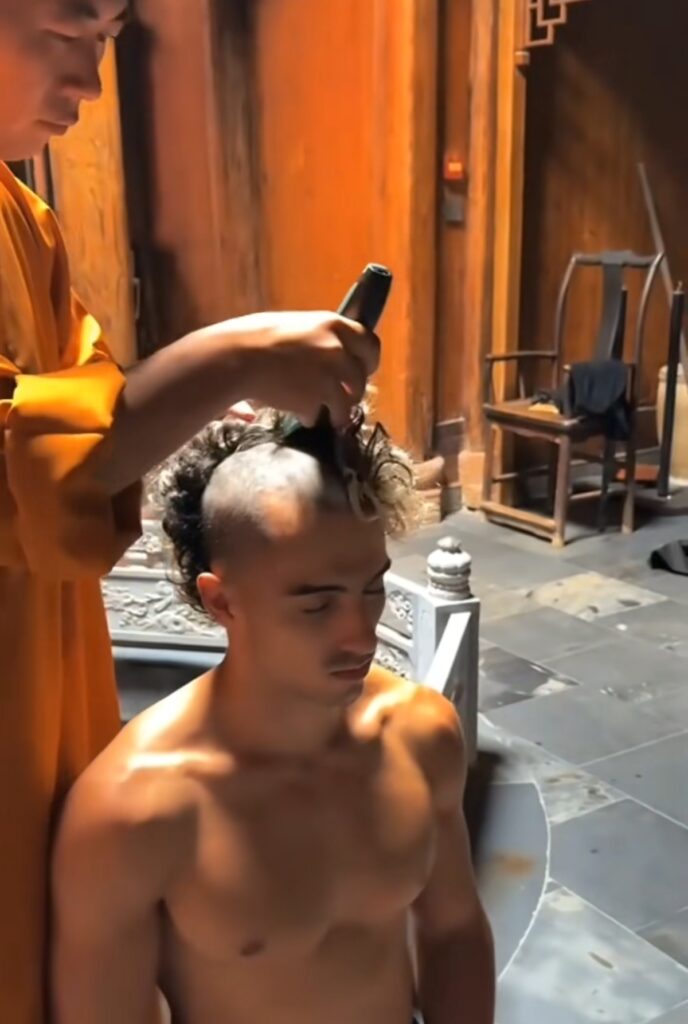

A real experience means a direct connection to the original Shaolin Temple in Henan, on Song Shan (Song Mountain), not a random kung fu camp using the Shaolin name for marketing. Our center is based inside the core Shaolin scenic and temple area, working with 34th–35th generation Shaolin warrior monks and disciples who still live and breathe the actual temple tradition.
Authentic Training vs Commercial Kung Fu Tours
Most people searching “Shaolin Kung Fu experience China” end up seeing:
- Flashy demo shows
- One-week “kung fu holidays” with light stretching and photo ops
- Huge boarding schools where one coach teaches 40–60 kids at a time
We built our academy to be the opposite of that. Authentic Shaolin training means:
- Real basics, every day – stances, kicks, footwork, conditioning
- Forms that belong to Shaolin – not generic wushu routines
- Contact work and applications – Sanda, Qin Na, partner drills
- Small international groups, not a kung fu tourist factory
Yes, you will get pictures. But most days you’ll be too tired and satisfied to care about posing.
Training with Real 34th–35th Generation Warrior Monks
If you want to train at Shaolin Temple in 2026 in a serious way, lineage matters. Our main coaches are:
- 34th–35th generation Shaolin warrior monks and disciples
- Trained inside or directly under masters from the original Henan Shaolin Temple
- Recognized within the actual Shaolin monk training tradition
You learn Xiao Hong Quan, Da Hong Quan, Tongbi, staff, Sanda, Qi Gong from people who didn’t just study Shaolin – they grew up in it. The corrections you get are the same ones they received as kids on the mountain.
Temple-Recognized Certification for Foreign Students
If you’re coming from the US (or anywhere overseas), you probably want to know: will what I do here “count” for anything?
At our Shaolin Temple Center China, we offer temple-recognized Shaolin Kung Fu certification for foreign students who complete certain program levels. That means:
- Your forms and basics are tested by authorized Shaolin masters
- You receive a certificate with real lineage and temple backing
- Long-term students can enter disciple-level training tracks, not just “tourist” certificates
It’s not a magic diploma. It simply records that you completed real, structured Shaolin training in Henan, under authentic guidance.
How Long You Should Stay for Real Immersion
You can absolutely get a taste of Shaolin in one week, but if you want a true Shaolin monk training experience:
- 1 week – Intense introduction, good for a first look and shock to the system
- 1 month – Solid foundation, you start to feel real changes in body and mind
- 3 months – First serious “before and after” stage; forms, conditioning and mindset shift
- 6–12 months – Deep immersion, disciple-level habits, real Shaolin warrior monk training results
If your goal is more than a story for social media – if you want to learn Shaolin Kung Fu in China in a way that sticks – aim for at least one month. That’s when Shaolin stops being a fantasy and starts becoming your daily life.
Why Train at Shaolin Temple Center China
If you want a real Shaolin kung fu experience in China in 2026—not a staged show for tourists—Shaolin Temple Center China is exactly what you should be looking at.
Officially authorized for foreign students
We’re an officially authorized Shaolin Temple training center for foreigners, not a random school using the Shaolin name.
That means:
Proper documents and invitations to support your China visa for Shaolin kung fu training
Direct recognition from the original Shaolin Temple in Henan
Legit Shaolin monk training experience with real lineage
Real lineage, real masters
Our coaches and masters are connected to 34th–35th generation Shaolin warrior monks, with direct lines back to the temple.
You get:
- Traditional Shaolin forms training (Xiao Hong Quan, Da Hong Quan, staff, etc.)
- Shaolin Sanda, Qi Gong, and Chan Buddhism as they’re actually taught in Henan
- The kind of guidance you’d expect in a true Shaolin temple kung fu academy, not a commercial show school
If you want to get a feel for how this looks in practice, you can check out our Shaolin warrior program training breakdown at the Shaolin Temple warrior training page.
Small groups, serious training
We keep groups small on purpose. This is not a “kung fu tourist factory.”
Expect:
- Hands-on correction and 1-on-1 attention
- Focused, disciplined classes instead of crowded demo-style groups
- A training culture that respects both beginners and serious martial artists
Who this Shaolin center is best for
Shaolin Temple Center China is a strong fit if you:
- Live in the U.S. (or abroad) and want authentic Shaolin kung fu training in China without getting scammed
- Want more than a photo-op—you actually want to train at Shaolin Temple in 2026
- Are ready to work hard, sweat, and learn, whether you’re a total beginner or a seasoned martial artist
- Care about real lineage, safe housing, and structured programs designed for international students
If you’re serious about learning, not just watching, this is the type of real Shaolin kung fu school in china you should be aiming for.

Shaolin Kung Fu Training Programs in China (2026)
If you want a real Shaolin kung fu experience in China in 2026, the first choice you make is program length. At Shaolin Temple Center China, I keep the training tracks clear and focused so you know exactly what you’re signing up for.
Short-Term Shaolin Kung Fu Experiences (1 Week–1 Month)
Short-term programs are for people who want an authentic taste of Shaolin without putting life on pause for half a year.
Best for: working professionals, students on break, martial artists checking out real Shaolin training in China.
1-Week Intense Shaolin Introduction Program
In one week, you won’t become a monk—but you will get a real shock to your system.
You can expect:
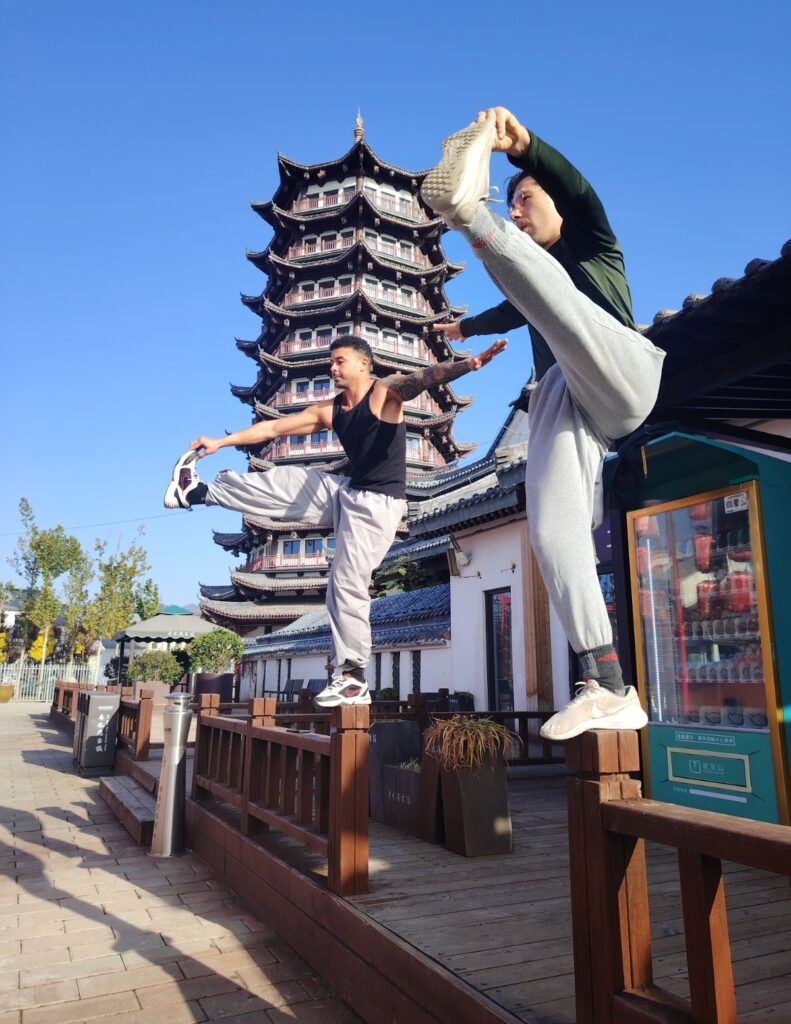
- Daily basics: stances, kicks, punches, conditioning
- One core traditional form or routine
- Intro to Shaolin Qi Gong and meditation
- Close-up look at real Shaolin warrior monk training
This is a smart option if you’re not sure how your body or schedule will handle longer training.
1-Month Shaolin Warrior Foundation Program
A month lets you go beyond “tourist mode” and actually build a base.
You’ll usually:
- Learn and polish at least one full traditional Shaolin form
- Build real flexibility, strength, and stamina
- Train basic Sanda (Chinese kickboxing) and practical skills
- Start to feel the rhythm of Shaolin daily life
If you already train back home, a month at a real Shaolin kung fu camp in China can upgrade your basics fast.
3-Month Traditional Shaolin Kung Fu Training Track
Three months is where serious progress starts.
This track is ideal if you want:
- Multiple traditional forms (like Xiao Hong Quan or other core sets)
- Strong conditioning, better coordination, and real fighting skills
- Deeper exposure to Chan (Zen) mindset and discipline
- Enough time for habits and technique to stick
For many US students, 3 months is the sweet spot between “life-changing” and “still realistic” with work or school.
6–12 Month Shaolin Disciple & Long-Term Study Program
This is for people who aren’t just visiting Shaolin—they want to live it.
Long-term students typically:
- Train several core forms and weapons in depth
- Develop solid Sanda, Qin Na (joint locking), and self-defense
- Go through serious internal training: Qi Gong, breathing, mindset
- Work toward temple-recognized Shaolin kung fu certification
A year won’t make you a monk, but it will change how you move, think, and live. This is the closest you’ll get to a Shaolin monk training experience without ordaining.
Private 1-on-1 Training With a Shaolin Grandmaster
If you want very targeted work—maybe you’re a coach, black belt, or competitor—1-on-1 training with a senior master is the way to go.
This format is best for:
- Sharpening specific forms, applications, or weapons
- Fixing technical gaps fast
- Serious martial artists who value time over volume
You can combine private sessions with any group program for a hybrid setup.
Kids & Family Shaolin Kung Fu Summer Camp in China
For US families, the Shaolin kung fu summer camp in China is a way to share something real with your kids instead of another generic “activity camp.”
During summer camp, families can:
- Train age-appropriate Shaolin basics together
- Join cultural, temple, and outdoor activities around Song Shan
- Keep kids active, focused, and off screens in the best way possible
You can see what the family-style camp looks like on our Shaolin Kung Fu summer camp in China page.
How to Choose the Right Shaolin Program Length for You
Use this simple filter:
- 1 Week – “I want to try real Shaolin, but I’m not sure yet.”
- 1 Month – “I want a solid experience and clear progress.”
- 3 Months – “I want serious skills and a deeper mindset shift.”
- 6–12 Months – “I’m ready for a full Shaolin lifestyle and long-term training.”
If you’re unsure, start shorter. Once you’re on the ground and training, it’s usually easy to extend if there’s space available.
If you care about who’s actually teaching you, you can also look at our Shaolin kung fu staff and lineages to match your goals with the right masters.
Daily Life in a Real Shaolin Kung Fu Camp in China

If you’re looking for a real Shaolin kung fu experience in China (not a photo-op tour), daily life at Shaolin Temple Center China is built around training, recovery, and temple culture—not sightseeing.
Typical Day Schedule at Shaolin Temple Center China
A normal training day follows a clear rhythm so you can focus on progress:
- 5:30 AM – Wake up
- 6:00–7:00 AM – Morning run & basics
- 7:00–7:30 AM – Stretching / light conditioning
- 7:30–8:00 AM – Breakfast
- 9:00–11:30 AM – Main kung fu training (forms, kicks, basics)
- 12:00–14:00 PM – Lunch & rest
- 14:30–17:00 PM – Sanda, weapons, conditioning
- 17:30–18:00 PM – Dinner
- 19:00–20:00 PM – Theory, Chan meditation, flexibility
- 22:00 PM – Lights out / quiet time
Times can shift slightly by season, but the structure stays tight so you actually live like a Shaolin kung fu student, not a tourist.
Morning Routine: 5:30 AM, Running and Basics
Mornings set the tone for your whole day:
- Wake-up at 5:30 AM, no excuses.
- Running around the village or temple-area roads to build stamina.
- Shaolin basics: stances, kicks, footwork, line drills.
- Light body conditioning (push-ups, squats, core work).
It’s demanding but controllable. Most U.S. students tell me the first week feels tough, then their body starts to adapt fast.
Daily Mix: Forms, Sanda, Weapons and Conditioning
During the main sessions, you get a real Shaolin warrior monk training structure, not random cardio:
- Traditional forms (like Xiao Hong Quan or Da Hong Quan as you progress)
- Sanda (Chinese kickboxing) – striking, footwork, partner drills
- Weapons training – staff, broadsword, and more depending on level
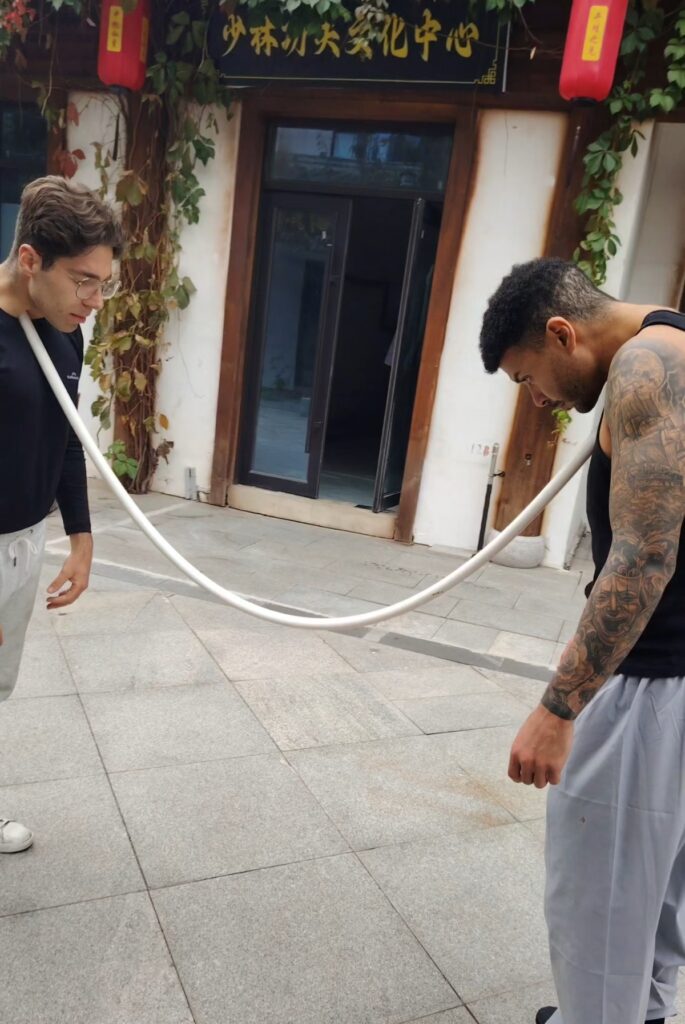
- Conditioning – legs, core, grip strength, impact conditioning
You’re not just “learning moves.” The curriculum is integrated, similar to the official kung fu training schedule used in temple-related programs.
Afternoons and Evenings: Theory, Meditation, Flexibility
Afternoons focus on power and skill, evenings on recovery and mindset:
- Internal work: basic Qigong, breathing, alignment
- Chan (Zen) meditation: calm the mind, sharpen focus
- Shaolin theory & philosophy: what you’re doing and why
- Flexibility & recovery sessions: deep stretching, partner stretching
This is where a real Shaolin monk training experience differs from a fitness bootcamp—your mental discipline grows with your physical ability.
Weekend Temple Visits and Cultural Activities
You’re training inside the Shaolin scenic and temple area, so weekends give you time to connect with the culture:
- Guided visits to the original Shaolin Temple, Pagoda Forest, and nearby mountains
- Optional Chan Buddhism talks, calligraphy, or cultural classes
- Time to explore Dengfeng town for snacks, gear, or basic shopping
This is not a tour-bus experience—you see the area like someone who actually lives and trains near Shaolin Temple.
How Free Time Works During Shaolin Training
Yes, you get breaks—but the lifestyle is still serious:
- Midday rest after lunch for recovery (nap, stretch, shower)
- Evening free time after class to journal, call home, or review forms
- Wi-Fi in the accommodation for staying connected (within reason)
- You’re free to step out locally, but late nights and partying will kill your training—nobody sugarcoats that.
If you want a kung fu experience in China that actually changes your body and mindset, this kind of structured daily life is exactly what you need.
What You Actually Learn in a Real Shaolin Kung Fu Experience in China
When you train at Shaolin Temple Center China, you’re not just “doing some moves” for photos. You’re learning a complete system: forms, fighting, weapons, internal work, and mindset – the way Shaolin warrior monks actually train.
Core Traditional Shaolin Forms
You start with foundation stances and footwork, then move into real temple-lineage forms like:
- Xiao Hong Quan (Small Hong Fist) – your first major form, building power, speed, and structure.
- Da Hong Quan (Big Hong Fist) – longer, harder, with more jumps, power strikes, and rhythm.
- Tongbi Quan and related sets – long-range power, whipping arms, and fast transitions.
As you get stronger, you may also touch classic temple sets like Shaolin Shi San Quan (13 Fist) and selected animal boxing styles such as tiger or crane, similar to the methods shown in the temple’s own training breakdown of Shaolin animal boxing styles.
Practical Fighting: Sanda, Qin Na, and Self-Defense
This isn’t just “demo kung fu.” You’ll drill:
- Shaolin Sanda (Chinese kickboxing) – kicks, punches, sweeps, and throws with pads and partner work.
- Qin Na (seizing and joint control) – locks, holds, and takedown entries.
- Applied self-defense – how to turn traditional movements into simple, direct responses you could use in real life.
For U.S. students who want something that “actually works,” this part usually hits home fast.
Traditional Shaolin Weapons
Once your basics are stable, you can add weapons training, usually starting with:
- Gun (staff) – the core Shaolin weapon, great for conditioning and coordination.
- Dao (broadsword) – powerful, aggressive, and very physical.
- Jian (straight sword) – more precise, technical, and refined.
- Qiang (spear) – footwork-heavy, amazing for speed and full-body power.
Weapons are taught methodically: grip, body mechanics, basic drills, then full forms and partner work where appropriate.
Shaolin Qi Gong, Internal Power, and Conditioning
To handle the training volume, you’ll learn internal methods that support your body:
- Shaolin Qi Gong – breath-led movements for lung capacity, recovery, and joint health.
- Static and dynamic stances – building leg strength and rooted power.
- Conditioning – body conditioning for forearms, shins, core, plus flexibility work to keep you safe.
Some long-term students may also be introduced to classic routines like Yi Jin Jing–style tendon training and deeper internal exercises depending on their level and health.
Chan Buddhism, Meditation, and Shaolin Philosophy
Real Shaolin training always connects back to Chan (Zen) Buddhism. You’ll be guided through:
- Sitting meditation – simple, structured sessions to calm the mind and improve focus.
- Walking and standing meditation – learning to keep awareness during movement and training.
- Shaolin mindset – discipline, humility, consistency, and how to carry this into your daily life back in the States.
It’s not about turning you into a monk; it’s about giving you tools to handle stress, work, and life with a clearer head.
Progression: From Beginner to Advanced Shaolin Student
The training is layered so anyone can plug in:
- Complete beginners start with stances, basic kicks, punches, and a simple form.
- Intermediate students add more complex forms, Sanda sparring, and one or two weapons.
- Advanced students refine power, speed, and expression, take on harder forms, and may focus on specialty areas like fighting, performance, or internal work.
Coaches look at your age, fitness, background, and how long you’re staying, then build your path from there. If you stay long enough and show commitment, you’re not just “trying kung fu in China” – you’re building a real Shaolin base that you can keep growing for years.
Accommodation and Food Near the Shaolin Temple
When you come for a real Shaolin kung fu experience in China, where you sleep and what you eat matters almost as much as how you train. At Shaolin Temple Center China, I’ve set things up so you live close to the heart of the temple area, but with enough comfort that you can actually recover and enjoy the grind.
Student Housing Options
You can choose the setup that fits your budget and your need for privacy:
- Shared rooms (most popular)
- 2–4 students per room
- Basic, clean, and close to the training areas
- Great if you want community, motivation, and to split costs
- Private rooms (limited slots)
- For students who want quiet time to rest, work online, or meditate
- Ideal for older students, working professionals, or light sleepers
All rooms are simple but functional—think training camp, not luxury hotel.
Modern Comforts You Actually Get
You’re not “roughing it” like in an old kung fu movie. Daily life is straightforward and practical:
- Reliable Wi‑Fi for staying in touch, remote work, or posting your training progress
- Hot water for showers year-round
- Laundry access (machines or local service) so you’re not hand-washing uniforms all week
- Heating and/or fans depending on season
- Basic cleaning and maintenance so you can focus on training, not fixing things
The goal is comfort that supports serious training, not distractions.
Where You Actually Train
One of the biggest advantages here is location: you train inside the core Shaolin scenic and temple area, not miles away in some random city school.
Typical training spaces include:
- Indoor training hall / dojo – for forms, Sanda drills, pads, and wet/cold weather
- Outdoor courtyards – for traditional Shaolin forms, weapons, conditioning
- Temple-area practice spots – some sessions near the mountain and temple zone when allowed
You’re training where Shaolin kung fu was born, not in a generic gym. That alone changes the feel of every session.
Shaolin-Style Vegetarian Meals
Food is simple, clean, and built to fuel heavy training—not Instagram photos:
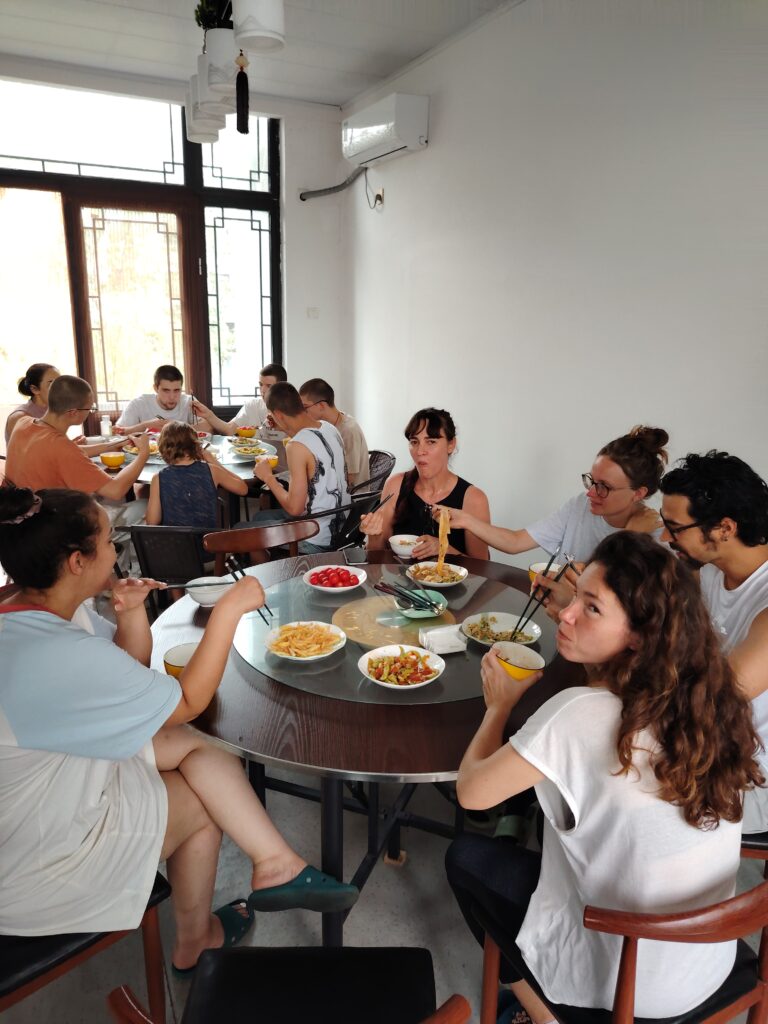
- Mostly vegetarian / Shaolin-style: rice, noodles, tofu, vegetables, eggs, some local side dishes
- 3 basic meals a day on normal training days
- Mild seasoning, not greasy, not junk food
- Can usually adjust for vegan or simple dietary needs if you tell us in advance
This isn’t a foodie tour; it’s fuel for performance, recovery, and staying lean and light on your feet.
How Living Conditions Compare to Other China Kung Fu Schools
Compared to big commercial kung fu boarding schools in China, the setup at Shaolin Temple Center China is:
- Smaller and quieter – fewer students, less chaos, more focus
- Closer to the real temple – you’re in the actual Shaolin scenic area, not outskirts
- More balanced – basic comfort + authentic environment instead of packed dorms and factory-style training
- Better suited for foreigners – cleaner, more structured, with support in English, especially for first-time visitors
If you’re looking for a real shaolin kung fu experience in China—not a crowded, noisy kung fu factory—these living conditions are built for you.
Costs of a Shaolin Kung Fu Experience in China (2026)
If you’re planning a real Shaolin Kung Fu experience in China in 2026, you need a clear idea of what it actually costs and what you get for your money. I’ll break it down the way most U.S. travelers budget: by program length, what’s included, and what’s not.

Price Breakdown by Program Length
Exact prices can shift a bit year to year, but most serious Shaolin kung fu training programs run on a simple tier:
- 1 week Shaolin kung fu experience China:
Good for a “test drive” of real monk-style training. Expect a higher weekly rate since it’s short and intensive. - 1 month authentic Shaolin kung fu training China:
The most popular option for U.S. travelers. You get time to adjust, see real progress, and still keep costs reasonable. - 3+ months long-term kung fu training China:
Monthly cost usually drops the longer you stay. This is where you move from “tourist experience” to genuine Shaolin lifestyle and skill-building.
Most shaolin kung fu camp China programs charge a flat per-week or per-month tuition that includes almost everything you need on the ground.
What Tuition Usually Includes
At a real Shaolin Temple kung fu academy like Shaolin Temple Center China, standard tuition typically covers:
- Daily training (5–6 days per week) with Shaolin warrior monks or disciple-level masters
- Accommodation in shared or private student rooms near the training area
- Meals (usually 2–3 simple, mostly vegetarian meals per day, Shaolin-style)
- Basic training uniform (often 1–2 sets; extras cost more)
- Use of training facilities: indoor hall, outdoor courtyards, basic equipment
- Basic support for foreign students: orientation, rules, simple translation support
Think of tuition as a full package: you pay once per term, and your main living and training costs in China are mostly handled.
Extra Costs to Budget For
On top of your Shaolin Temple training fees, plan for:
- Flights: Round-trip to China, plus domestic travel to Henan (Zhengzhou or nearby)
- Visa fees: Typically a tourist (L) visa or short-term study visa depending on your program and length
- Travel insurance: Non-negotiable in 2026 — medical + trip coverage
- Airport transfer or transport to Shaolin: Train, bus, or arranged pickup from Zhengzhou
- Personal spending: SIM card, snacks, coffee, weekend trips, souvenirs, laundry extras
- Medical checks or gear: If the school requires a health certificate, plus mouth guard, gloves, shin guards for Sanda, etc.
If you’re used to U.S. prices, your day-to-day spending in Henan (outside tuition) will feel very affordable, especially if you stay focused on training and eat local.
Certification, Gear and Optional Add‑Ons
Most authentic Shaolin temple discipleship programs and longer stays include:
- Shaolin Temple Center China certification after completing a program (week, month, 3+ months)
- Assessment of forms and Sanda skills by your master
- Optional private 1-on-1 sessions with senior masters or a Shaolin grandmaster (extra fee)
- Additional weapons or advanced forms outside the core curriculum (may cost extra)
- Extra uniforms, shoes, or traditional weapons you want to take home
If you plan to train seriously back in the States, investing in quality staff, broadsword, or training gear while in China often works out cheaper than buying in the U.S.
How Shaolin Training Costs Compare to Other Camps
Compared with many martial arts retreats or intensive kung fu training camps around the world:
- Per day cost is usually lower than U.S. or European camps, especially for long stays
- You’re training at the source near the original Shaolin Temple, not at a generic “Asian martial arts camp”
- The value comes from lineage, intensity, and environment — you’re living the monk-style routine, not just doing a few classes and sightseeing
If you’ve ever looked at premium adult martial arts programs in the U.S., you’ll quickly see that living and training at Shaolin Temple Center China for a month often costs less than a couple of months of high-end classes back home, with far more training hours packed in.
For U.S. travelers who want real results, not a staged kung fu show, this is one of the most cost-effective ways to get deep, traditional training with authentic Shaolin warrior monk instructors.
Visa, Flights and Getting to Shaolin Temple (2026)
If you’re planning a real Shaolin Kung Fu experience in China in 2026, you need to get three things right from the U.S.: visa, flights, and ground transport.
China Visa Options for Shaolin Kung Fu Students in 2026
For most U.S. travelers coming to train at Shaolin Temple Center China, these are the most common options:
- Tourist (L) visa – Best for short-term Shaolin Kung Fu camps (1 week–1 month).
- Student / training-related visa – For 3–12 month Shaolin warrior monk training or long-term programs, the school can usually support a study or private-visit style visa depending on your case.
- Multiple-entry visa – Smart if you plan to combine training with broader China travel.
Plan on applying 4–8 weeks before your flight. Shaolin Temple Center China provides guidance so your visa purpose clearly matches “Shaolin kung fu training in China” and avoids avoidable embassy issues.
Required Documents and Invitation Letters
You’ll handle the consulate; we’ll handle most of the paperwork. Typically, you’ll need:
- Valid passport (at least 6 months remaining, blank visa pages)
- Completed China visa application form
- Passport-style photo
- Official invitation letter from Shaolin Temple Center China with:
- Your full name and passport number
- Program dates and training type (short-term, long-term, disciple, etc.)
- Confirmation of accommodation near Shaolin Temple
- Flight booking info (sometimes requested, one-way or round-trip)
- Proof of funds / basic travel insurance (depending on consulate)
Once you’re accepted into a program, we issue the invitation letter and school confirmation so you can walk into your visa appointment prepared.
Best Airports to Fly Into (Zhengzhou and Others)
Your main target airport is Zhengzhou Xinzheng International Airport (CGO) in Henan. From the U.S., you’ll usually connect through:
- Beijing (PEK / PKX)
- Shanghai (PVG)
- Guangzhou (CAN)
- Hong Kong (HKG) or Seoul/Tokyo as common Asia hubs
If flights and timing work better, you can also arrive via Luoyang or Xi’an, then connect by high-speed train into Henan, but Zhengzhou is by far the simplest for a Shaolin kung fu experience in China.
Getting from Zhengzhou Airport to Shaolin Temple
From Zhengzhou airport to the Shaolin area near Dengfeng, you have three main options:
- School airport pickup – Easiest for first-timers; a driver holds a sign with your name and takes you straight to Shaolin Temple Center China.
- Private car / DiDi – Like China’s Uber; we can send you the destination details in Chinese so you just show the driver.
- Train + bus combo – Airport shuttle or metro into Zhengzhou city → high-speed train to Dengfeng / nearby station → local taxi to the temple area.
Travel time is about 1.5–2.5 hours door to door, depending on traffic and route.
Airport Pickup, Private Transfer and Transport Tips
To keep arrival stress-free:
- Book pickup with us once your flight is confirmed – especially if you’re arriving late at night.
- Keep our Chinese address and phone number printed and on your phone.
- Use official taxis or DiDi, not random drivers.
- Have some Chinese yuan in cash for small rides or snacks.
- Turn on international roaming or get an eSIM so you can message us when you land.
If you want to see what past students’ arrival and travel days actually looked like, check the real stories in our Shaolin Temple Center China student experience section.
Who Can Join a Shaolin Kung Fu Experience in China
If you’re a US-based traveler thinking about a real Shaolin kung fu experience in China in 2026, here’s who this is actually for—and who should think twice.
Age Requirements: Adults, Teens, and Kids
At Shaolin Temple Center China, we keep it simple:
- Adults: Most programs are built for ages 18–55
- Teens: Motivated teens 13+ can usually join with a parent or guardian
- Kids: Shorter, lighter kids and family Shaolin kung fu camps run in summer
- Upper age limit: If you’re 55+, it’s case-by-case—health and mindset matter more than age
We’re not a daycare or tourist show. Kids and teens need to be willing to train, not dragged along.
Fitness Level and Health Conditions
You don’t need to be an athlete, but you can’t show up broken and expect it to go well.
Ideal student profile:
- You can jog 1–2 miles without collapsing
- You have no serious heart, spine, or joint conditions your doctor hasn’t cleared
- You’re ok with high-intensity movement, jumping, kicking, and impact
- You’re mentally ready for 5–6 hours of training most days
If you’re unsure whether you meet the basic requirements, check the detailed health and readiness info in the center’s guide to requirements for foreigners to learn kung fu in China and talk to your doctor before booking flights.
Can Complete Beginners Train at Shaolin Temple?
Yes. A real Shaolin monk training experience in Henan is absolutely open to:
- People with zero martial arts background
- People who only did gym workouts or team sports
- People coming from other arts (BJJ, boxing, MMA, karate, TKD, etc.)
What matters most is:
- You show up on time
- You follow instructions
- You’re willing to repeat basics until your legs are on fire and your stance is solid
You won’t be thrown into advanced Xiao Hong Quan or Sanda sparring on day one. You start with structure, stance, flexibility, and core Shaolin basics.
How Hard Is Shaolin Training Really?
Let’s be honest:
- Physical level: Harder than a normal gym routine, lighter than a full-time pro fight camp
- Daily feel: You’ll be sore, tired, and humbled during the first week
- Adaptation: By week 2–3, your body adjusts, and you feel yourself getting stronger and sharper
- Weather: Henan summers are hot and humid, winters are cold—you train anyway
If you hate being uncomfortable or pushed, this is not for you.
If you like the idea of discipline, structure, and doing hard things on purpose, you’ll love it.
Real People Who Train Together
You won’t just be surrounded by 20-year-old athletes. In a real Shaolin kung fu camp in China, you’ll typically see:
- Older beginners (40–60): Office workers, entrepreneurs, and parents who finally made time to do this “one big thing” for themselves
- Families: Parent + teen combinations doing a shared challenge instead of a resort vacation
- Athletes: CrossFitters, runners, MMA hobbyists, and yoga people all using Shaolin to level up their mental and physical game
Everyone trains to their level, but the standard is the same: show respect, work hard, don’t quit on yourself.
If you can handle honest feedback, some pain in your legs, and early mornings, you’re exactly the kind of person who should be looking at a real Shaolin kung fu experience in China in 2026.
How to Choose a Real Shaolin Kung Fu School in China
If you want a real Shaolin kung fu experience in China (not a staged show), you need to be picky. Here’s how I’d evaluate a school before sending any student or family there.
Red flags of fake or overly commercial Shaolin academies
Walk away fast if you see:
- Only performance-based “kung fu shows” but very little real training time
- No clear master names or lineages listed on the site or on the wall
- Huge classes (50–100+ people) with almost no personal correction
- Pushy sales tactics – constant upgrades, “photo package,” “performance fee,” etc.
- More time sightseeing than training
- No real connection to Songshan Shaolin Temple in Henan
- Dirty dorms, poor food, zero structure – big sign they only want your money
A real Shaolin kung fu school will care more about training quality than filling beds.
How to verify temple affiliation and master lineages
You want proof, not just marketing:
- Ask for the Chinese name of the head master and their generation (e.g., 34th or 35th generation Shaolin disciple).
- Ask which Shaolin Temple monk or abbot confirmed their lineage.
- Check if the school is officially authorized to train foreigners and issue Shaolin Temple–recognized certificates.
- Ask for photos and videos of masters training inside the real Shaolin Temple or core scenic area.
- Search the master’s Chinese name on Baidu/WeChat to see if they’re known in Henan’s Shaolin community.
If they dodge lineage questions or get vague, that’s your answer.
Big boarding schools vs temple-area Shaolin centers
Both have pros and cons. Know what you’re signing up for.
| Type | Big Kung Fu Boarding School | Temple-Area Center (Like Ours) |
|---|---|---|
| Class size | Often 1000+ students | Small groups, focused on adults/foreigners |
| Vibe | Sports boarding school | Traditional, close to monk lifestyle |
| Goal | Sanda competition, performance | Authentic Shaolin forms + culture |
| Location | Outside main temple scenic zone | Inside or next to core Shaolin area |
| Personal coaching | Limited | High – daily 1-on-1 correction |
| Best for | Chinese kids competing in Sanda | Adults, serious learners, families |
If your goal is authentic Shaolin training near the original temple, a temple-area center is usually the better fit. If you also care about broader kung fu options, you can check guides like where to learn kung fu in China to compare.
English support and international student services
For US students, this is non‑negotiable:
- English-speaking translators or coaches on site
- Clear English schedule, rules, and safety info
- Help with visa invitation letters and airport pickup
- Staff used to Western expectations (basic hygiene, privacy, clear communication)
- Ability to explain forms, body mechanics, and Shaolin concepts in English
If the school barely understands your questions by email, your daily training communication will be rough.
Safety, environment and training culture to look for
You should feel safe, challenged, and respected:
- Safe area near Dengfeng / Songshan with low crime
- Organized campus – clean training halls, safe equipment, no chaos
- Structured daily schedule (wake, training, meals, rest) – not random
- Coaches correct hard but don’t humiliate or abuse students
- Medical help available and reasonable response to injuries
- Students from multiple countries, not just one market
- Clear rules about curfew, alcohol, and conduct
Bottom line: a real Shaolin kung fu experience in China should feel serious, disciplined, and grounded in real temple tradition, not like a cheap “kung fu theme park.”
Frequently Asked Questions About a Shaolin Kung Fu Experience in China
Do I need previous martial arts experience?
No. You don’t need any martial arts background to join a real Shaolin kung fu experience in China.
At Shaolin Temple Center China, we:
Start beginners with stance work, flexibility, and basic kicks/punches.
Adjust intensity to your current fitness and age.
Place you in groups by level, not ego.
If you’re already training MMA, BJJ, karate, taekwondo, or boxing, the coaches will build on what you know and plug Shaolin fundamentals and forms into your existing base.
Is there English-speaking Shaolin instruction?
Yes. We built the program specifically for international students:
Core Shaolin monk–lineage masters teach the training.
Translators or bilingual coaches support key sessions, corrections, and theory.
Daily schedule, rules, and safety briefings are explained clearly in English.
You’ll still hear Chinese terms for forms, stances, and techniques, which is part of the authentic Shaolin monk training experience, but you won’t be left guessing what to do.
Can women train and live at the Shaolin school?
Absolutely. Women are fully welcome to train, live, and progress here.
Shared or private room options are arranged to respect privacy.
Training intensity is based on level and goals, not gender.
We’ve had solo female travelers, college students, and moms bring their kids.
The culture is disciplined and respectful. The focus is on real Shaolin kung fu training, not macho posturing.
How safe is Shaolin and China for foreign students in 2026?
The Shaolin Temple area in Henan is one of the calmer, more traditional parts of China, and in 2026 it remains:
Very safe for day-to-day life, including walking around the area.
Focused on tourism, religion, and kung fu, not nightlife trouble.
Structured: you’re in a school environment with set schedules and supervision.
Most issues foreigners run into in China are practical, like payments and apps. That’s why we guide students on using things like Alipay and WeChat in China so daily living is smoother. We still recommend standard travel insurance and normal common sense, like anywher
How long until I see progress in my Shaolin skills?
You’ll feel changes fast if you show up and work:
1 week: Better flexibility, stronger legs, first taste of real Shaolin basics.
1 month: Noticeable stamina, cleaner basics, 1–2 traditional forms remembered.
3 months+: Deeper form quality, fighting timing, conditioning, and mindset shift.
6–12 months: Long-term body change, internal power, and real Shaolin foundation.
You get out what you put in. Train hard, eat well, sleep on time—you’ll be surprised how quickly your body and mind adapt.
Is the Shaolin certification recognized and useful?
Yes, if you train at a real, temple-connected center.
Shaolin Temple Center China issues temple-recognized Shaolin Kung Fu certificates that:
Confirm how long you trained and what you covered (forms, Sanda, weapons, etc.).
Are signed/stamped by officially recognized Shaolin masters.
Help if you later teach, open a small class, or just want proof of serious training—not a tourist photo-op.
It’s not a “college degree,” but inside the kung fu world, real Shaolin lineage and legitimate certificates speak louder than any marketing.
Can I film, take photos, and post on social media while training?
Yes, within reasonable limits and with respect:
You can film your forms, conditioning, and daily life in the camp.
Group photos and training clips are fine, as long as they don’t disrupt class.
In temple areas, follow local rules about where filming is allowed.
Most students share their Shaolin kung fu experience in China on Instagram, YouTube, and TikTok. If you’re serious about content, let us know—we can help you capture some training shots that still respect the monks, teachers, and other students. You can also check real student energy in the Shaolin Temple Center China photo gallery.
Why a Shaolin Kung Fu Trip to China Can Change Your Life
Real Mental & Physical Transformation
A real Shaolin kung fu experience in China isn’t a fitness vacation. It’s a full reset.
When you train at Shaolin Temple Center China, your day is built around:
Hard physical work – kicks, stances, power training, Sanda, weapons
Strict routines – early mornings, discipline, zero excuses
Quiet time – meditation, breathing, stretching, Chan (Zen) practice
Most students from the U.S. notice fast changes:
Better posture, strength, and endurance
Clearer head, less anxiety and overthinking
More self-control around food, screens, and daily habits
You’re not just “learning kung fu.” You’re rewiring how you move, think, and handle stress.
Living Near the Original Shaolin Temple Center Changes Your Mindset
Living and training right by the original Shaolin Temple Center in china hits differently than any gym or weekend retreat back home.
You wake up to mountain air, and monks walking past on their way to morning practice.
You see people in their 40s, 50s, even 60s still training, which quietly kills every excuse you’ve ever had.
The culture, Chan philosophy, and daily routine force you to zoom out from “my job, my stress, my phone” and look at your life from a bigger angle.
It’s the kind of environment where it actually feels natural to unplug, train hard, and think clearly about what you want next in life. If you’re curious what day-to-day Shaolin life feels like, the school’s life at the academy breakdown gives a good snapshot.
What Students Actually Say After Months of Real Shaolin Training
When students finish a real Shaolin kung fu camp in China and fly back to the States, they usually say things like:
“I didn’t realize how soft I’d gotten until week one.”
“I came for kung fu, I left with a different relationship to pain, comfort, and consistency.”
“I thought I needed motivation. What I really needed was structure and people who take training seriously.”
Common takeaways: