


Top 10 Most Popular Chinese Martial Arts Explained by Masters
You might think you know Chinese martial arts from watching Ip Man or Crouching Tiger, Hidden Dragon.
But with over 300 distinct styles recorded in history, where do you actually start?
Most guides just give you a generic list copied from a textbook.
We do things differently.
As the Shaolin Temple Center China, we live and breathe these ancient traditions every single day. We know that choosing a style isn’t just about fighting—it’s about finding the right path for your body and mind.
Whether you are looking for the explosive power of Shaolin Kung Fu, the internal healing of Tai Chi, or the practical combat efficiency of Sanda, understanding the distinct differences is crucial.
In this guide, I’m going to break down the top 10 most popular Chinese martial arts that have shaped history and modern fighting.
Ready to find the style that fits your journey?
Let’s get started.
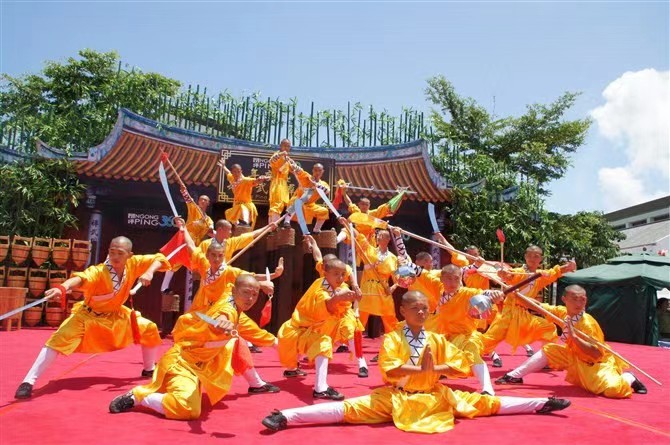
The Two Great Divides of Chinese Martial Arts
When people first look into Chinese martial arts, they usually run into two big questions: What’s the difference between internal and external styles, and how do Northern and Southern systems actually feel in training? Here’s the breakdown most beginners wish they had.
Internal vs External Martial Arts
Internal martial arts, like Tai Chi, Baguazhang, and Xingyiquan, focus on:
- Qi cultivation
- Breathwork and relaxation
- Whole‑body power through structure instead of muscle
External martial arts, such as Shaolin Kung Fu, Sanda, and Five Animals Kung Fu, emphasize:
- Strength and conditioning
- Explosive power
- Forms, kicks, and fast striking
Both paths lead to real skill—internal styles just build power from the inside out, while external styles start from the outside in.
Northern vs Southern Styles
Northern styles are famous for:
- Long-range kicks
- Big, athletic movements
- Systems like Northern Praying Mantis and traditional Shaolin monks’ training
Southern styles focus on:
- Stable stances
- Short power
- Close-range self‑defense techniques seen in arts like Wing Chun
Shaolin Kung Fu (Shaolinquan)
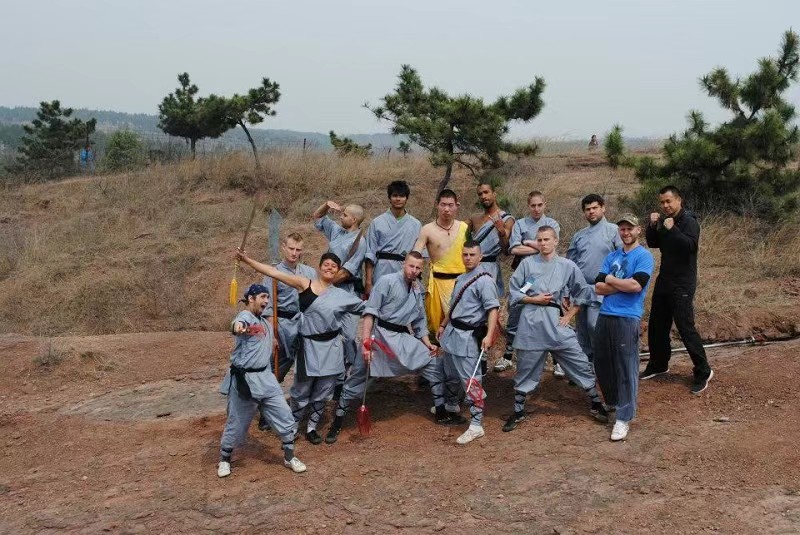
As the undisputed leader among the top 10 most popular Chinese martial arts, Shaolin Kung Fu serves as the historical foundation for many Asian fighting styles. At our academy located at the foot of Songshan Mountain in Dengfeng—the official birthplace of Kung Fu—we preserve the authentic tradition where martial arts and Chan Buddhism converge. This unique dual cultivation, known as “Chan Wu,” ensures that physical prowess is always balanced with mental discipline and meditation.
Shaolinquan is primarily an external style (Waijia) renowned for its dynamic aesthetics and combat efficiency. Our curriculum focuses on:
- Explosive Power: Developing speed, agility, and raw physical strength through high-intensity drills.
- Animal Forms: Utilizing traditional movements that mimic the Tiger, Leopard, Snake, Crane, and Dragon to condition specific muscle groups and internal systems.
- Rigorous Conditioning: A strict regimen designed to improve flexibility, stamina, and bone density.
We provide lineage-based training directly from authentic Shaolin Masters to international students. Whether you are a beginner or an advanced practitioner, our programs—ranging from one week to five years—offer a direct transmission of knowledge. Students learn traditional Taolu (forms), combat applications, and the cultural heritage essential to mastering this ancient art.
Core Aspects of Shaolin Training
| Feature | Description |
|---|---|
| Origin | Songshan Shaolin Temple, Dengfeng, China. |
| Focus | External conditioning, forms (Taolu), and Chan meditation. |
| Goal | Unifying the body and mind through disciplined physical exertion. |
Tai Chi Chuan (Taijiquan)

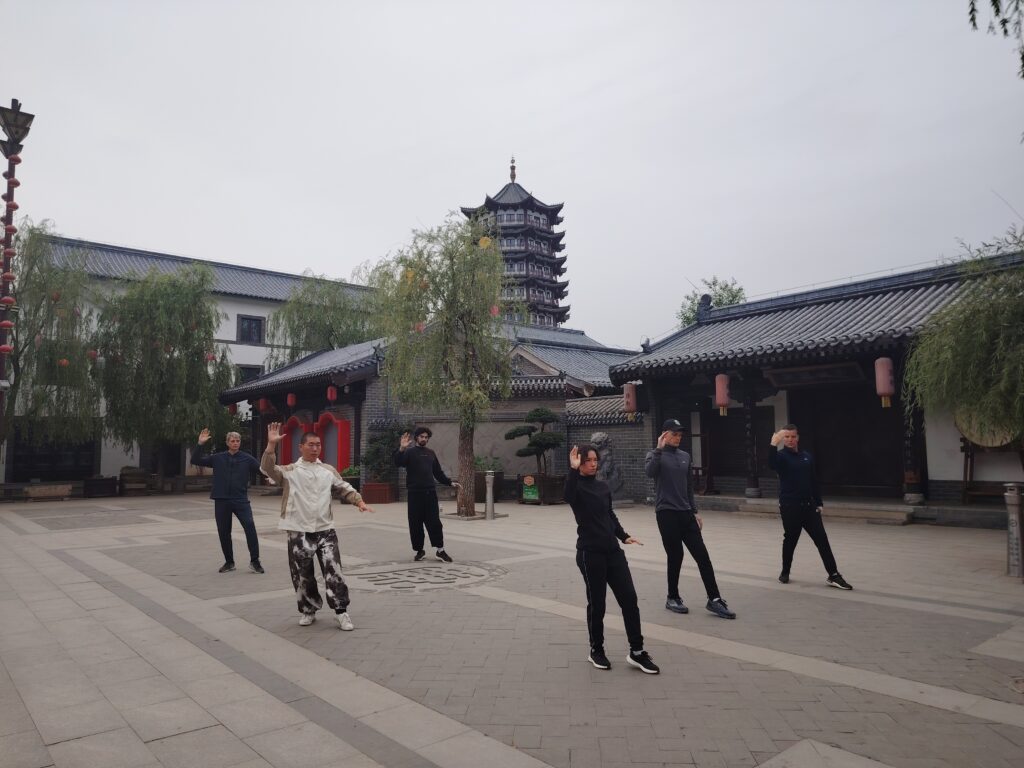
While Shaolin Kung Fu focuses on external strength, Tai Chi Chuan (Taijiquan) represents the internal side of Chinese martial arts, known as Neijia. At our academy, we view Tai Chi as moving meditation that balances Yin and Yang through controlled, fluid motion. It is not just about slow movements; it is a sophisticated method of Qi cultivation (energy work) where the mind guides the breath, and the breath moves the body. This internal focus helps practitioners develop a deep sense of body awareness and structural alignment that external training alone cannot provide.
Chen Style vs. Yang Style
Most students coming from the US are familiar with Yang style, which features large, gentle, and even-paced movements. However, our curriculum emphasizes Chen Style Tai Chi, the oldest and original form of Tai Chi. Unlike the constant slow tempo of Yang style, Chen style combines soft, winding movements with sudden, explosive releases of power known as Fa Jin.
| Feature | Chen Style (Our Focus) | Yang Style |
|---|---|---|
| Tempo | Alternates between slow and explosive | Consistent, slow, and gentle |
| Movement | Spiraling, coiling (Silk Reeling) | Large, open frames |
| Primary Goal | Martial application & internal power | Health, relaxation, & accessibility |
| Best For | Those wanting combat depth + health | Beginners seeking pure relaxation |
Health Benefits of Tai Chi
Training in Tai Chi offers massive benefits for stress relief and longevity. By regulating the breath and calming the mind, students effectively lower cortisol levels and improve mental clarity. The practice is essential for recovery, acting as the perfect counterbalance to the high-impact training of Sanda or Shaolin Kung Fu.
- Joint Health: Gentle rotation improves flexibility and reduces joint pain.
- Internal Energy: Qi cultivation boosts vitality and immune system function.
- Balance & Stability: Strengthens the lower body, preventing falls and improving posture.
- Mental Focus: Acts as active mindfulness, reducing anxiety and improving concentration.
Sanda (Chinese Kickboxing)
When discussing the top 10 most popular Chinese martial arts, Sanda (also known as Sanshou) stands out as the bridge between traditional forms and modern combat sports. At our academy, we treat Sanda as the practical application of Shaolin Kung Fu, stripping away the pageantry to focus on what works in a real fight.
Modern Sporting Application
Sanda was developed to test the combat efficacy of Chinese martial arts in a safe, regulated environment. It combines the striking of kickboxing with the wrestling techniques found in traditional Kung Fu. For students looking for high-intensity conditioning and Chinese Kickboxing (Sanda) training, this discipline offers a rigorous curriculum that builds speed, power, and reaction time.
Full-Contact Techniques
Unlike performance-based Wushu, Sanda is a full-contact system. Our training emphasizes three core components:
- Striking: Utilizing punches and kicks derived from traditional styles but adapted for gloves and sparring.
- Wrestling (Shuai Jiao): Incorporating fast throws and sweeps to disrupt an opponent’s balance.
- Takedowns: Learning to catch kicks and execute throws, a signature element that separates Sanda from Muay Thai or Western boxing.
Bridging the Gap to MMA
For practitioners interested in self-defense techniques or Mixed Martial Arts (MMA), Sanda provides a unique edge. The emphasis on “kick-catch-throw” mechanics makes it highly effective against standard strikers. We teach students how to transition seamlessly from striking range to grappling range, making it a comprehensive system for modern self-defense. This practical curriculum ensures you aren’t just learning movements, but gaining the ability to protect yourself in real-world scenarios.
Wing Chun (Yongchun)
As one of the top 10 most popular chinese martial arts, Wing Chun is renowned for its directness and efficiency. Originating in Southern China, this style gained massive international recognition through the Ip Man Wing Chun lineage. At our academy, we maintain the authentic integrity of this system, offering students a deep dive into a style that prioritizes structure and sensitivity over brute muscular strength.
Centerline Theory and Close-Range Combat
Wing Chun is the premier choice among close-range combat styles. Our training emphasizes the centerline theory, a strategic concept where practitioners learn to dominate the central axis of interaction. By guarding your own center while attacking the opponent’s, you maximize defense and offense simultaneously. This approach makes Wing Chun highly practical for self-defense techniques in tight spaces, such as hallways or crowded areas, where wide stances and high kicks are ineffective.
Core components of our Wing Chun curriculum include:
- Rapid Chain Punching: Drills focused on generating overwhelming speed and continuous forward pressure.
- Economy of Motion: Eliminating unnecessary movements to react faster than the opponent.
- Tactical Sensitivity: Developing “listening energy” (Chi Sao) to predict and redirect an attacker’s force instantly.
Qigong (Energy Cultivation)
While many students come to us looking for explosive kicks and strikes found in the top 10 most popular chinese martial arts, they quickly learn that real power starts internally. Qigong is the engine behind high-level martial arts performance. It is not just about deep breathing; it is a disciplined practice of energy cultivation that strengthens the body from the inside out.
At our academy, we integrate Qigong directly into the daily training schedule, typically starting in the early morning. This practice is essential for balancing the intense physical demands of external styles like Shaolin Kung Fu. By mastering breath control and mental focus, students improve their recovery times and generate greater force in their strikes.

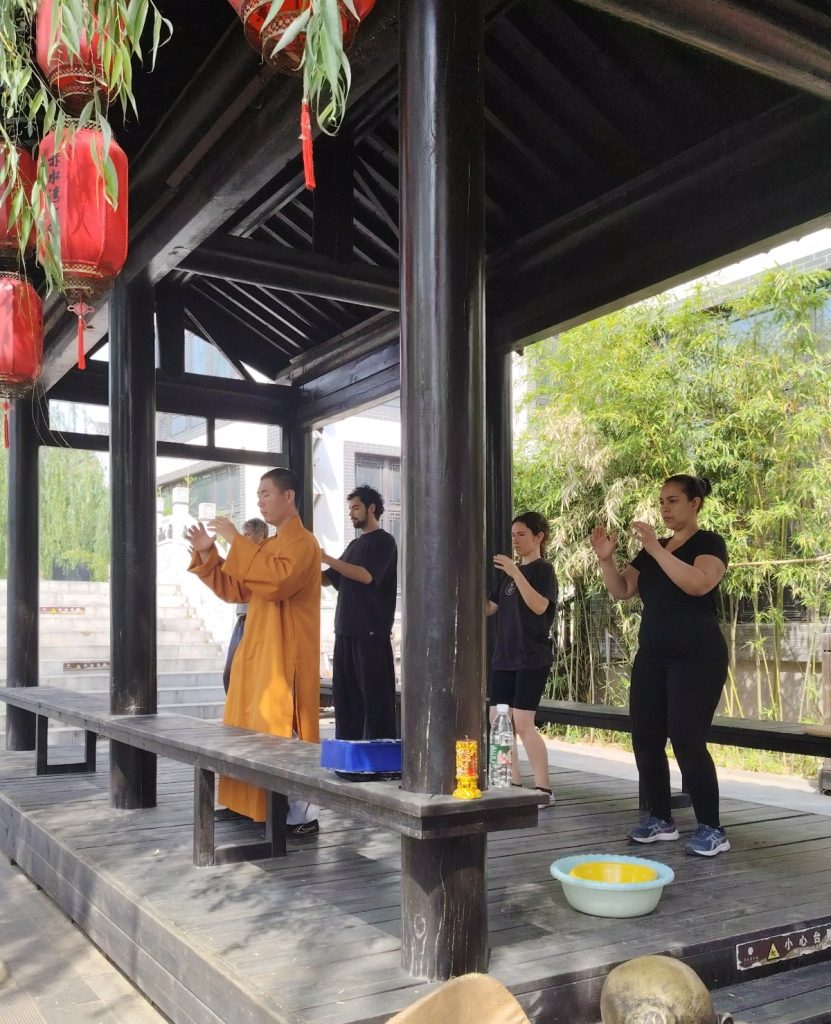
Key Forms We Teach
Our curriculum focuses on the most authentic and effective forms passed down through the Shaolin lineage:
- Ba Duan Jin (Eight Section Brocade): A set of eight movements focused on improving organ function, flexibility, and overall health recovery. It is excellent for beginners and advanced practitioners alike to maintain physical balance.
- Yi Jin Jing (Muscle/Tendon Change Classic): This advanced form focuses on strengthening the tendons and ligaments. It is crucial for power generation, turning the body into a unified, resilient unit capable of withstanding heavy impact.
Mastering these internal arts is what separates a casual hobbyist from a true martial artist. Whether you are here for a short-term stay or a multi-year residency, Qigong provides the mental clarity and physical durability needed to succeed.
Baguazhang (Eight Trigram Palm)
As one of the three major internal styles (Neijia) alongside Tai Chi and Xingyi, Baguazhang holds a distinct place among the top 10 most popular Chinese martial arts. While our primary focus at the academy remains Shaolin Kung Fu, we recognize the value of Bagua’s unique circular methodology for advanced students looking to diversify their skills.
This style is immediately recognizable by its signature circle walking training method. Instead of meeting force with force head-on, Bagua practitioners utilize constant motion to evade attacks and strike from unexpected angles.
Key characteristics of Baguazhang training include:
- Circle Walking: The foundation of the art, developing stability and the ability to fight while constantly moving around an opponent.
- Evasion Tactics: Emphasis on unbalancing the adversary and moving to their “blind side” rather than blocking directly.
- Internal Focus: Like Tai Chi, it requires deep concentration and Qi cultivation to generate power through fluid, coiling movements.
- Palm Strikes: The style favors open-hand palm strikes over closed fists, allowing for versatile hooking and piercing techniques.
Mastering Baguazhang requires patience and a strong foundation in traditional stances, making it a sophisticated addition to any martial artist’s repertoire.
Xingyiquan (Form-Intention Fist)
Among the top 10 most popular Chinese martial arts, Xingyiquan (Form-Intention Fist) distinguishes itself through sheer directness. While other internal styles like Tai Chi focus on yielding, Xingyi is all about linear, aggressive movement. We teach this style to students looking for a combat system that doesn’t waste time—it drives straight through the opponent’s defenses.
The core of Xingyiquan relies on distinct mechanics that separate it from external styles:
- Linear Explosive Power: Attacks are short, fast, and travel in a straight line to overwhelm the opponent.
- Five Elements Theory: The combat techniques are based on the five elements (Metal, Wood, Water, Fire, and Earth), each corresponding to a specific striking energy like splitting or crushing.
- Mind-Body Unity: The “intention” (Yi) leads the “form” (Xing), meaning your mental focus dictates the physical impact.
At our academy, we emphasize the Neijia (internal) aspects of this art. You learn to generate force from the ground up, coordinating your entire body into a single, explosive strike. It is an excellent complement to Shaolin Kung Fu, teaching you how to maintain structure while delivering maximum power in close quarters.
Northern Praying Mantis (Tanglangquan)
Among the top 10 most popular Chinese martial arts we offer, Northern Praying Mantis (Tanglangquan) is distinct for its speed and unique mimicry. Originating from the observation of the mantis fighting a cicada, this style has become a staple of traditional Kung Fu forms taught by our Shaolin Masters. It is highly aggressive and relies on rapid, continuous movement to overwhelm opponents.
At our academy, we focus on the practical application of the “mantis hook”—a technique using the wrist and fingers to trap an opponent’s arms while simultaneously striking. This makes it an incredibly effective close-range combat style.
Key elements of our Mantis training include:
- Continuous Attacks: Linking strikes together so the opponent has no time to recover.
- Hooking and Plucking: Using the signature hand formation to control and redirect incoming force.
- Precision Targeting: striking vulnerable areas with speed and accuracy.
Training in Tanglangquan improves reflexes and hand-eye coordination. We ensure students understand the authentic lineage of this style, combining the physical conditioning of Shaolin Kung Fu training in China with the intricate technical demands of the form.
Bajiquan (Eight Extremities Fist)
When discussing the top 10 most popular Chinese martial arts, Bajiquan is the definitive choice for raw, close-quarters dominance. Known as the “Eight Extremities Fist,” this style focuses on explosive short-range power, utilizing elbows, shoulders, and hips to deliver devastating strikes within a limited distance.
At our academy, we train students in the authentic mechanics of Bajiquan, emphasizing stability and heavy impact. Historically favored by bodyguards for Chinese emperors due to its lethal efficiency, this discipline is ideal for practitioners seeking practical self-defense applications that do not rely on flashy acrobatics.
Key characteristics of our Bajiquan training:
- Short-Range Power: Generates massive force in tight spaces without needing a wind-up.
- Body Checks: Uses the whole body (shoulders and hips) to crash into and off-balance opponents.
- Explosive Strikes: Direct and linear attacks utilizing the “eight extremities” like elbows and knees.
Choy Li Fut
Choy Li Fut earns its place among the top 10 most popular Chinese martial arts by effectively blending two distinct worlds. It is a hybrid system that combines the expansive footwork of Northern Kung Fu with the intricate, close-range hand techniques of Southern styles. This mix addresses the classic debate of Northern vs Southern styles by utilizing the strengths of both to create a versatile combat system.
Practitioners favor this style for its ability to handle chaotic situations and its unique power generation.
- Sweeping Strikes: The style is famous for wide, swinging arm strikes that generate massive power through rotational force, often using the back of the fist or forearm.
- Crowd Control: The movements are designed to engage multiple opponents simultaneously, making it a practical choice for self-defense techniques.
- Fluid Motion: Unlike some rigid systems, Choy Li Fut relies on relaxed, continuous power and flexible stances.
While our residency program at the academy focuses heavily on core Shaolin disciplines, Sanda, and internal arts, understanding the mechanics of hybrid styles like Choy Li Fut provides a broader perspective on the diversity of Chinese Wushu.
Philosophy in Chinese Martial Arts
The philosophy behind Chinese martial arts runs deeper than forms and fighting. Most traditional systems teach martial morality (Wu De) as the foundation. Wu De focuses on discipline, respect, self‑control, and using your skills responsibly. It’s a reminder that Kung Fu training is about shaping character just as much as improving strength or learning self‑defense techniques.
You also see Yin and Yang in how styles balance soft and hard power. Tai Chi uses slow, rounded movement to absorb force, while external martial arts like Shaolin Kung Fu apply direct, explosive energy. Good training teaches you how to switch between the two depending on the moment.
Another core idea is Qi cultivation, especially through breathwork and slow, mindful drills. Many students practice simple Qi Gong exercises to improve stability, focus, and whole‑body coordination. This internal work becomes even more important when training in colder seasons, where steady breathing supports energy and recovery—something we emphasize when explaining why it’s important to pr
Selecting Your Martial Arts Path
Choosing the right discipline from the top 10 most popular Chinese martial arts depends entirely on your personal goals. At our academy in Dengfeng, we see students from all over the world arrive with different objectives—some want to become professional fighters, while others seek spiritual grounding or physical rehabilitation. Because we offer a comprehensive curriculum under authentic Shaolin Masters, you don’t have to limit yourself to just one style, but knowing where to start helps maximize your residency.
Best Styles for Fitness and Agility
If your primary goal is physical transformation, Shaolin Kung Fu (Shaolinquan) is the undisputed king of conditioning. Our training schedule is rigorous, designed to push your limits regarding flexibility, stamina, and explosive power.
- Shaolin Kung Fu: Focuses on traditional Kung Fu forms that require deep stances, high jumps, and acrobatic agility. It is a full-body workout that builds lean muscle.
- Northern Praying Mantis: Excellent for developing speed and hand-eye coordination due to its rapid, complex hand techniques.
- Traditional Weapons: Training with the staff (Gun) or broadsword (Dao) adds significant resistance training, improving wrist strength and shoulder mobility.
Top Picks for Mindfulness and Health
For students focused on longevity, stress relief, and the health benefits of Tai Chi, we recommend starting with internal styles. These disciplines prioritize breath control and body alignment over brute force.
- Tai Chi (Chen Style): We teach the Chen style, which combines slow, meditative movements with sudden bursts of power. It is excellent for balance and joint health.
- Qigong: Forms like Ba Duan Jin and Yi Jin Jing are foundational here. Qi cultivation (Qigong) is not just for older practitioners; it is the method we use to recover the body after hard training and to cultivate internal energy.
- Chan Meditation: While not a “style” of fighting, our curriculum integrates Chan Buddhism to train the mind, helping you stay focused and calm under pressure.
Practical Choices for Combat and Sparring
If you are here to learn how to fight or want effective self-defense techniques, you need styles that involve resistance and contact.
- Sanda (Chinese Kickboxing): This is the modern sporting application of Kung Fu. It bridges the gap between forms and fighting, teaching you how to apply strikes, throws, and takedowns against a resisting opponent.
- Wing Chun: Famous for its efficiency, this style is ideal for close-range combat and practical self-defense in tight spaces.
- Bajiquan: Known for its short-range power and body checks, making it highly effective for close-quarters engagements.
Combining Internal and External Training
The true essence of Shaolin Kung Fu training in China lies in the balance between Neijia vs Waijia (Internal vs External). We believe you shouldn’t choose just one. A complete martial artist needs the explosive power of external styles and the focus of internal arts.
Most of our long-term students combine disciplines. For example, you might spend your mornings drilling high-intensity Sanda or Shaolin forms to build external strength, and your evenings practicing Qigong or Tai Chi to heal the body and settle the mind. This holistic approach—combining “Chan” (Zen) and “Wu” (Martial Arts)—is what separates authentic Shaolin training from a standard gym workout.
Frequently Asked Questions
What is the difference between Kung Fu and Wushu?
This is one of the most common questions we get. Wushu literally translates to “martial arts” in Chinese and often refers to the modern, acrobatic sport you see in Wushu competition history. Kung Fu (Gong Fu) refers to any skill achieved through hard work and time. At our academy, we focus on traditional Kung Fu forms, emphasizing combat application and heritage over purely aesthetic performance.
Which Chinese martial art is best for beginners?
If you are just starting out, Shaolin Kung Fu is the ideal foundation. It builds your flexibility, stamina, and coordination from the ground up. For those looking for a lower-impact entry point focused on health, Tai Chi is an excellent choice. Our masters tailor the training intensity to your current fitness level, making these martial arts for beginners accessible to everyone.
Can foreigners train at the Shaolin Temple in China?
Absolutely. Our academy is specifically dedicated to teaching Shaolin Kung Fu training in China to international students. We welcome practitioners from all over the world, regardless of religion, gender, or background. We provide an immersive environment including accommodation, meals, and translation, so you can focus entirely on your training at the birthplace of Kung Fu.
Is Sanda effective for street self-defense?
Yes, Chinese Kickboxing (Sanda) is highly effective for real-world defense. Unlike styles that focus only on forms, Sanda is a full-contact combat sport that combines striking (punches and kicks) with wrestling throws and takedowns. It bridges the gap between traditional technique and modern combat, giving you practical skills to handle aggressive situations.
How to Start Training Chinese Martial Arts
Starting Chinese martial arts comes down to knowing your goals and choosing a style that fits how you want to train. If you want a full-body workout and strong self‑defense skills, styles like Shaolin Kung Fu, Wing Chun, or Sanda are solid picks. If you want stress relief, mobility, and internal strength, Tai Chi or other internal martial arts may be a better fit.
When you look for a school, make sure the training is authentic. A good master should demonstrate clear technique, explain practical use, and offer real martial arts forms—not just performance routines. Many students also look for teachers connected to real Shaolin lineage, since that tradition still focuses on practical skills and traditional methods. You can train directly with authentic practitioners through programs like training with real Shaolin monks, which you can find when learning how to join the Shaolin Temple at https://shaolintemplechina.com/how-to-join-shaolin-temple/.