


Shaolin Experience Week China Train with Authentic Warrior Monks
Chan, Wu, Yi: The Three Pillars of the Shaolin Way
When I first stepped onto the training grounds for my own shaolin experience week, I thought I was just there to sweat and punch. I quickly learned that authentic Shaolin Kung Fu training is entirely built on three inseparable pillars: Chan, Wu, and Yi. If you leave one out, you miss the entire point of the Chan Buddhism lifestyle.
Chan: The Zen Mindset
Chan is the practice of Zen mindset and mental cultivation. During a shaolin experience week, we use daily meditation and structured silence to build mental clarity under pressure. It is not about clearing your mind of all thoughts; it is about learning how to stay calm and focused when your legs are burning from holding a stance. This mindfulness practice gives you the mental resilience required to survive the grueling physical training.
Wu: Martial Arts Execution
Wu represents the physical application of power, body mechanics, and traditional Shaolin forms. This is where you learn how to generate explosive force using your entire body rather than just raw muscle.
- Body Mechanics: Aligning your joints to maximize structural strength.
- Traditional Forms: Practicing ancient movement sequences to build coordination.
- Physical Application: Translating slow movements into functional defensive power.
Yi: Holistic Medicine & Recovery
Yi is the pillar that surprises most Westerners, focusing on traditional medicine and physical longevity. True holistic physical discipline requires balancing intense exertion with intentional healing. We integrate traditional breathing mechanics and restorative flexibility to protect your joints and muscles. This recovery aspect ensures your body adapts to the stress of training instead of breaking down.
| Pillar | Core Focus | Daily Benefit |
|---|---|---|
| Chan (Mind) | Meditation & Silence | Sharp focus and mental clarity under pressure |
| Wu (Body) | Martial Arts Execution | Better body mechanics and explosive power |
| Yi (Healing) | Holistic Recovery | Restorative flexibility and joint protection |
Behind the Gates: Your Shaolin Experience Week Daily Routine
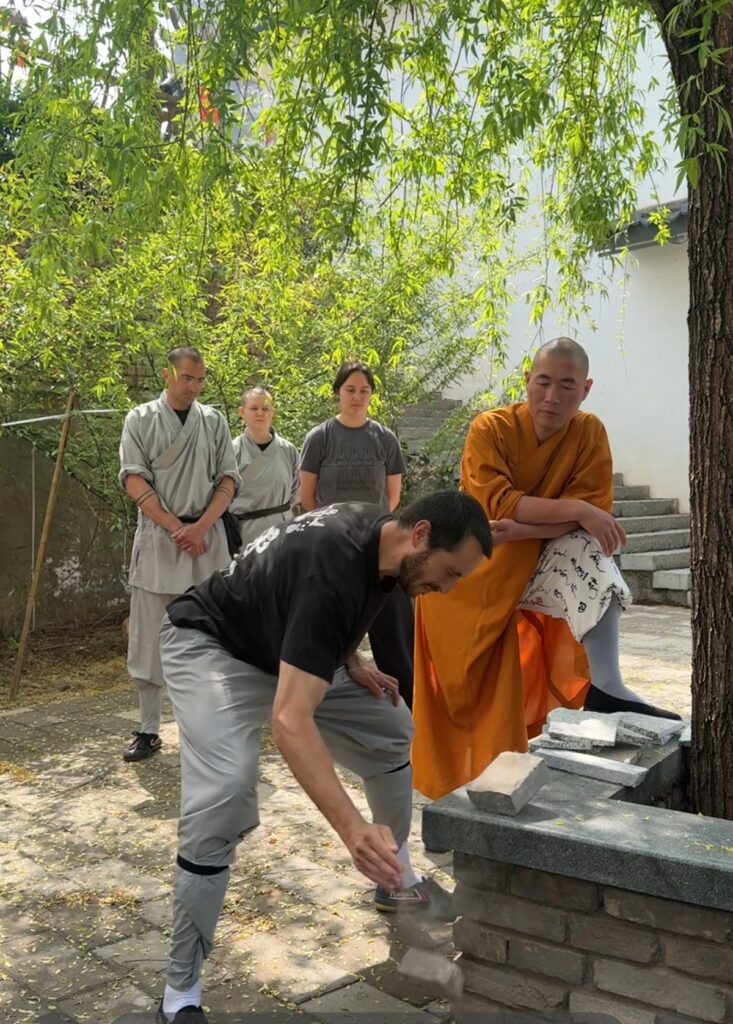

Ever wonder what a warrior monk daily routine actually feels like? During a shaolin experience week, your days are structured to push your limits while building deep mental clarity. We don’t do fluff or wasted movement here. Every hour serves a specific purpose in your mind-body transformation.
Here is exactly how your daily schedule breaks down behind the temple gates.
The Daily Training Schedule
| Time Block | Focus Area | Key Activities |
|---|---|---|
| 05:30 AM – 08:00 AM | Morning Dawn Conditioning | Mountain runs, lung-clearing breathing, Tai Chi training in China, flexibility |
| 08:00 AM – 09:00 AM | Fuel | Traditional Shaolin vegetarian breakfast |
| 09:00 AM – 12:00 PM | Main Training Block | Foundational stances, fundamental strikes, traditional forms |
| 12:00 PM – 02:30 PM | Mid-Day Reset | Lunch, physical downtime, self-study, and mental assimilation |
| 02:30 PM – 05:30 PM | Afternoon Application | Sanda kickboxing basics, pad work, conditioning, functional strength |
| 06:00 PM – 09:30 PM | Evening Atmosphere | Dinner, restorative Qigong, optional culture classes, lights out |
Breaking Down the Core Sessions
The Morning Dawn (05:30 AM – 08:00 AM)
Your day starts before the sun clears the mountains. The crisp morning air shocks your system awake as we head out for morning runs and fundamental flexibility conditioning. We transition quickly into fluid Tai Chi mechanics to wake up your joints and build core stability before sitting down for a clean, traditional Shaolin vegetarian breakfast.
The Main Training Blocks (09:00 AM – 12:00 PM)
This is where the real work happens. You will spend three hours mastering the structural foundations of authentic Shaolin Kung Fu training.
- Ma Bu (Horse Stance): Building explosive leg power and mental endurance.
- Gong Bu (Bow Stance): Developing forward drive and balance.
- Xiao Hong Quan: Your introduction to traditional Shaolin forms, linking movement, breath, and intent.
Afternoon Application (02:30 PM – 05:30 PM)
After a much-needed mid-day rest to let your brain and muscles absorb the morning notes, the afternoon shifts to combat application. We introduce you to traditional Chinese Sanda (Chinese kickboxing). You will work live pads, sharpen your footwork, run defensive drills, and push through hard target conditioning to build highly functional, real-world strength.
Evening Atmosphere (06:00 PM – 09:30 PM)
We finish the day by bringing your nervous system back down to earth. Evening sessions focus on restorative Qigong to heal the body, alongside optional Mandarin culture classes to understand the history behind the movement. Lights are out by 09:30 PM—because tomorrow, we repeat.
Can a Beginner Handle a Shaolin Experience Week?
Many people assume you need to be an elite athlete to step onto the training grounds. That is a complete misconception. A shaolin experience week is designed to meet you exactly where you are, breaking down complex movements into manageable steps. Whether you are looking into adult martial arts classes for beginners or seeking a complete mental reset, the training adapts to your current physical baseline.
The First 72 Hours: The Real Test
The beginning of a shaolin conditioning for beginners program is less about martial arts mastery and more about mental resilience.
- Day 1-2: Deep muscle soreness will set in as your body adapts to unfamiliar stances and repetitive movements.
- Day 3: The mental urge to quit peaks. This is where the lifestyle shift happens, forcing you to push past perceived physical limits.
The 7-Day Payoff
Completing a short-term martial arts camp delivers immediate, tangible results that you can carry back to your daily life. It acts as a powerful mind-body transformation week.
| Benefit | What You Gain |
|---|---|
| Physical Alignment | Noticeably improved posture and core engagement. |
| Resilience | Increased pain tolerance and stamina. |
| Mental Clarity | Structured focus and a practical blueprint for self-discipline. |
Cultural Immersion During Your Shaolin Experience Week
A true shaolin experience week goes far beyond the sweat and grit of the training hall. To fully absorb the medicine and mindset of this ancient tradition, you have to step into the living history of Henan province.
Living the History
Training at the Shaolin Temple Center China places you directly inside a UNESCO World Heritage site. Between intensive physical sessions, you will explore ancient architecture, walk through the historic Pagoda Forest, and hike the rugged mountain paths of Mount Song. This isn’t a museum tour—it is a rare chance to experience a Henan province temple experience exactly where martial arts and Chan Buddhism lifestyle intersected over 1,500 years ago.
Traditional Recovery Options
Authentic Kung Fu training demands serious physical recovery. We integrate time-tested Chinese medical therapies directly into your weekly routine to repair muscle tissue, increase circulation, and keep your body moving fluidly.
| Therapy | How It Aids Your Recovery |
|---|---|
| Authentic Cupping | Uses targeted suction to draw out deep muscle tension, reduce inflammation, and accelerate tissue repair. |
| Acupuncture | Stimulates specific meridian points to balance your body’s energy flow and provide natural pain relief. |
| Traditional Chinese Massage | Focuses on deep tissue manipulation and stretching to restore flexibility and alleviate structural soreness. |
Connecting with the Community
You will never train in isolation here. The academy brings together an international collective of goal-oriented practitioners, martial artists, and fitness enthusiasts from the United States and all over the globe. Sharing meals, communal living spaces, and exhausting training blocks creates a unique bond. You are all working toward a shared mind-body transformation week, pushing past personal limits alongside peers who hold you accountable every single day.
How to Prepare for Your Shaolin Experience Week
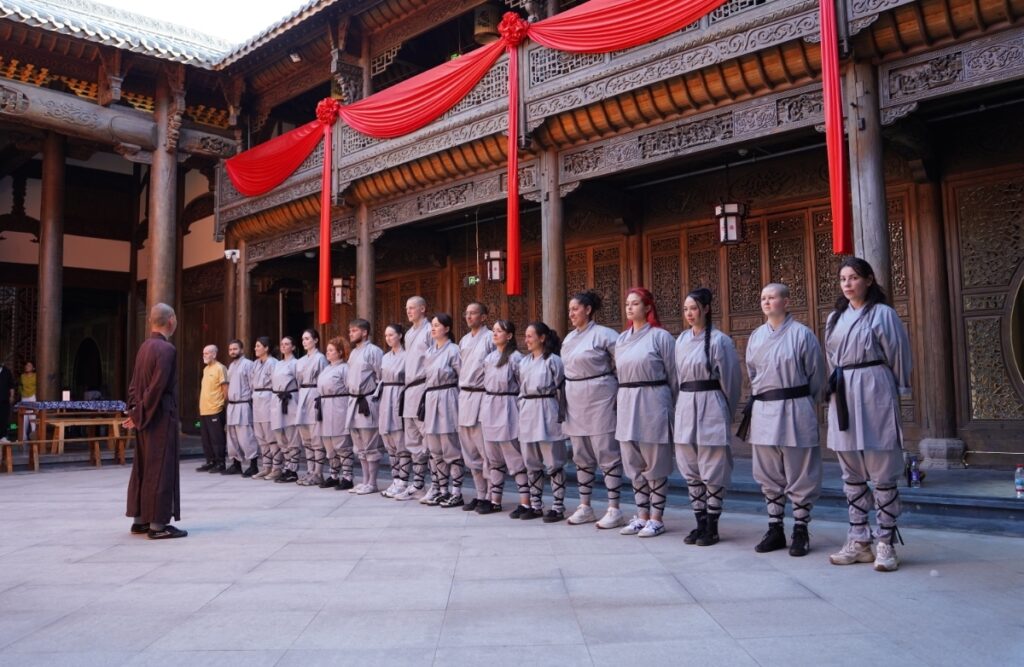
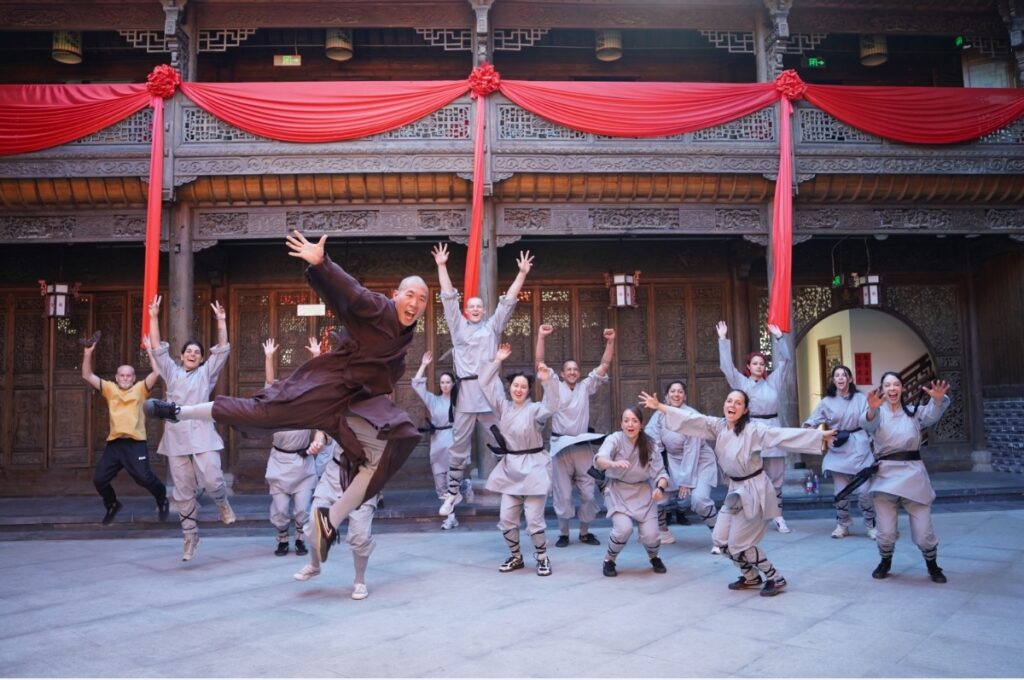
Arriving at the academy ready to train means preparing your body and mind well before your flight lands. A short-term martial arts camp is highly rewarding, but the physical demands are real. Following a basic preparation routine ensures you get the most out of your mind-body transformation week.
Physical Preparation
You do not need to be an elite athlete, but building a baseline level of fitness prevents early injuries and helps you keep up with the warrior monk daily routine. Focus on these three areas at least 4 to 6 weeks before arrival:
- Cardio Stamina: Mix in 30-minute runs or HIIT sessions three times a week to prepare for the mountain air and intense training blocks.
- Bodyweight Strength: Prioritize push-ups, squats, planks, and pull-ups to build functional endurance.
- Mobility Work: Dedicate time to stretching your hamstrings, hips, and lower back. Reviewing guides on how to train leg flexibility and basic skills will give you a massive head start before your first day on the mats.
Mental Preparation
The physical training is only half the battle; the Chan Buddhism lifestyle requires total mental openness.
- Adopt an “Empty Cup” Mentality: Leave your previous martial arts egos or preconceptions at home. Be ready to unlearn bad habits to properly absorb authentic teachings.
- Embrace Discomfort: Expect muscle soreness, schedule shifts, and mental fatigue. True growth happens when you push past the urge to quit during the first 72 hours.
Packing Essentials
| Category | What To Pack | Why It Matters |
|---|---|---|
| Apparel | Loose-fitting, breathable athletic pants and dry-fit t-shirts. | Standard workout shorts are not ideal for traditional Shaolin forms and stance training. |
| Footwear | Flat-soled canvas training shoes (like Feiyues) or flexible running shoes. | Proper grip and ground feel are critical for balancing during Sanda kickboxing basics. |
| Recovery Gear | Compression sleeves, muscle rubs (like Tiger Balm), and kinesiology tape. | Essential for managing daily fatigue and keeping your joints pr |