


Tai Chi Training in China Authentic Handan Shaolin Guide
Are you struggling to figure out how to plan an authentic martial arts journey overseas? Finding the right academy for tai chi training China can mean the difference between a commercialized tourist trap and a truly life-changing immersion.
As someone who knows the reality of training alongside 34th-generation Shaolin monks, I know that packing your bags to learn from authentic Tai Chi masters is a massive commitment. I’m going to give you logistical advice that goes way beyond basic tourist brochures, backed by real experience at the historical birthplace of Taijiquan.
In this post, you’re going to learn exactly what to expect from a martial arts retreat China—step by step. We’ll cover everything from securing your visa and navigating language barriers, to the intense daily schedule you’ll face on the training grounds.
So if you’re ready to leave modern burnout behind and master the synergy of internal and external arts, this guide is for you.
Let’s dive right in.
Why Travel to China for Tai Chi? The Advantage of Authenticity
Traveling to the source offers an experience that local studios simply cannot replicate. When you commit to Tai Chi training in China, you aren’t just learning a sequence of movements; you are stepping into a living history. Authentic training requires an environment where the external world fades away, allowing the internal work to begin.
Direct Lineage: Learning from 34th-Generation Masters
Authenticity begins with the teacher. Our academy is led by Master Shi Yanhao, a 34th-generation Shaolin Warrior Monk. Unlike commercial gyms, instruction here comes from masters who have dedicated their lives to the preservation of these arts. You receive corrections and guidance rooted in centuries of tradition, ensuring the form is practiced exactly as intended by the lineage holders.
The Environment: Train in the Chishuiwan Scenic Area
Internal martial arts require a specific atmosphere to cultivate Qi effectively. You cannot find deep stillness in a crowded city center.
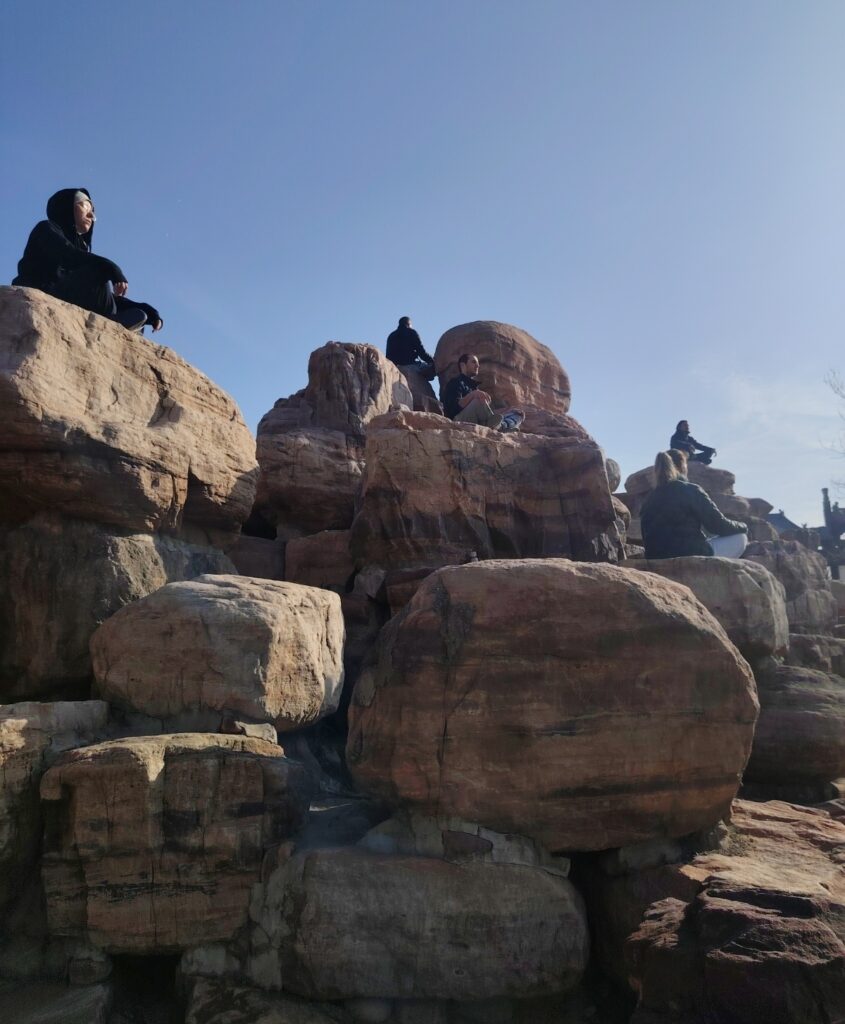
- Tranquil Location: We are situated in the Chishuiwan Scenic Area in Handan, Hebei.
- Zero Distractions: Far removed from the “hustle and bustle” of urban life, this setting allows you to disconnect from daily stress.
- Mind-Body Unity: The serene natural surroundings support the deep concentration required for genuine internal development.
Cultural Immersion: Taoism and Chan Buddhism
To master Tai Chi, one must understand the philosophy behind the motion. Our curriculum goes beyond physical mechanics to include the intellectual and spiritual pillars of the practice. Students engage in philosophy talks that explore the roots of Chan Buddhism and the Yin-Yang doctrine essential to Taoist thought. Through additional classes in Mandarin and Calligraphy, you gain the cultural context necessary to fully grasp the depth of the art.
Finding the Birthplace: Why Location Matters
The Handan Connection: Taijiquan’s Authentic Home
When you commit to tai chi training in China, where you plant your feet determines the quality of your growth. We established our academy in Handan City, Hebei Province, for a specific reason: this is the cradle of the art. Handan is an ancient capital and the undisputed birthplace of Taijiquan (Tai Chi). It is the home of Yang Luchan, the founder of Yang-style Tai Chi, making it the spiritual and historical center for internal martial arts.
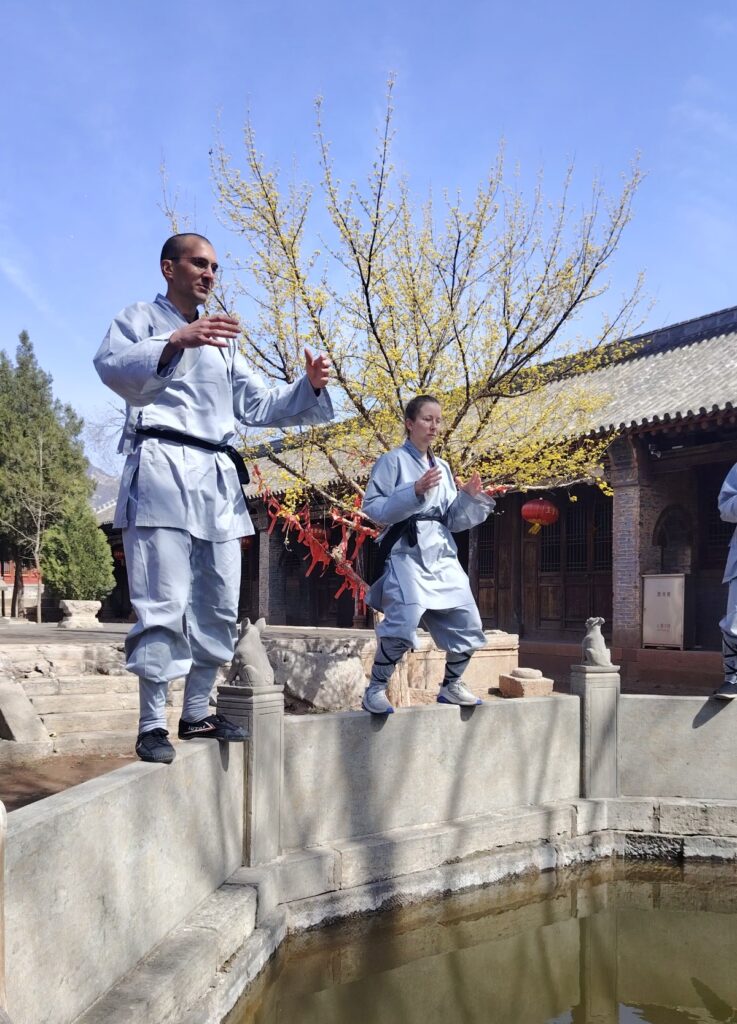
By training in the historic city of Handan, you aren’t just learning movements; you are tapping into a lineage that has thrived here for centuries. The energy here is different. We are located specifically within the Chishuiwan Scenic Area, providing a tranquil environment that mirrors the internal peace required for mastering Qi.
Beyond the Tourist Traps: Genuine Heritage
The market is flooded with commercialized schools that prioritize volume over virtue. We take a different path. Our center is the only facility officially designated by the Shaolin Temple to promote Shaolin culture to foreign students. We focus on an immersive retreat experience rather than a “vacation with exercise.”
Here is how we distinguish a genuine heritage site from a commercial tourist spot:
| Feature | Our Official Center | Commercial Tourist Schools |
|---|---|---|
| Focus | Deep immersion in Shaolin & Tai Chi culture | Quick courses & sightseeing |
| Environment | Peaceful, scenic retreat (Chishuiwan) | Crowded city centers or tourist hubs |
| Instruction | 34th-Generation Masters & Monks | General instructors or recent graduates |
| Outcome | Personal transformation & Official Certification | Souvenirs & basic movement knowledge |
We strip away the distractions of the modern city to help you focus entirely on mind-body unity. This is about discipline and authenticity, ensuring your time spent on tai chi training in China results in real skill acquisition.
The Synergy of Internal and External Martial Arts
Many American students come to us thinking martial arts are either purely physical or purely meditative. When you engage in authentic Tai Chi training China, you realize the true power lies in balancing both. It is the practical application of the Yin and Yang martial arts philosophy, seamlessly merging outward physical mechanics with inward mental focus.
Defining the Styles: Chen, Yang, and Beyond
Our internal martial arts training focuses on foundational systems that build real, functional strength.
- Traditional Chen style Tai Chi: Known for its explosive power (Fa Jin) and low stances. It is highly dynamic, alternating rapidly between slow, smooth movements and sudden, aggressive strikes.
- Yang Style: Features larger, steady, and flowing movements. It is excellent for structural balance, joint health, and building your baseline internal coordination.
The Shaolin Advantage: Blending Hard and Soft
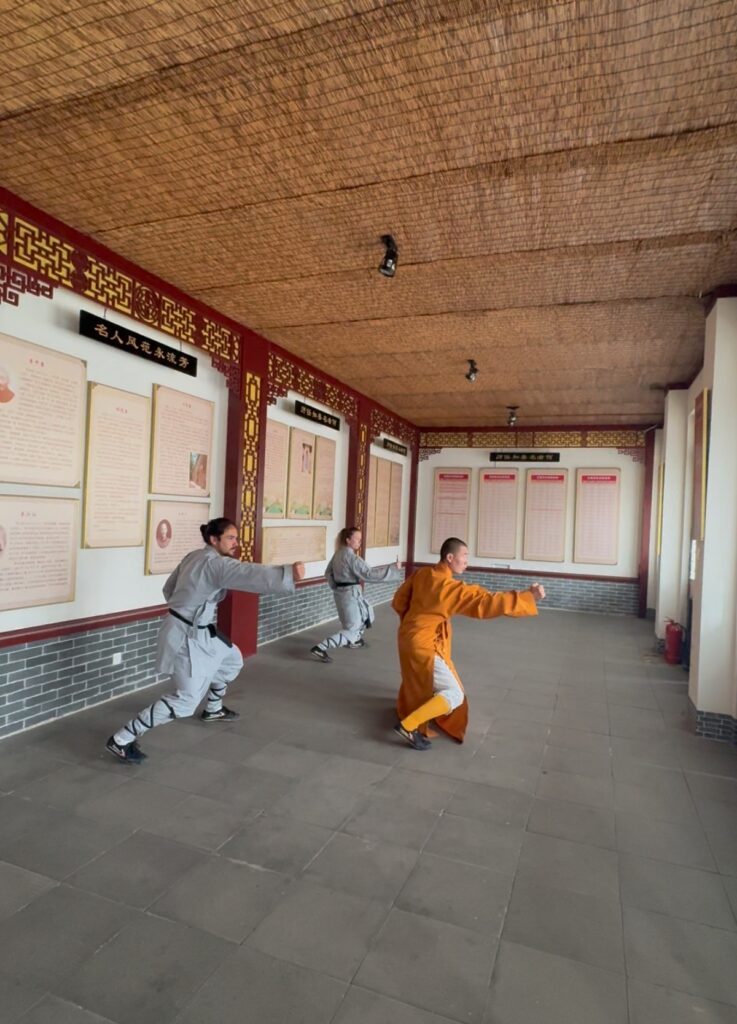
Training at the Shaolin Temple Center gives you a distinct edge. We offer a direct Shaolin Kung Fu and Tai Chi synergy. By combining the raw, external physical conditioning of Shaolin with the internal energy (Qi) cultivation of Tai Chi, you build a complete, battle-tested martial foundation. If your goal is to push your physical limits while mastering internal mechanics, integrating our Shaolin Kung Fu classes into your daily routine accelerates your progress significantly.
Curriculum Breadth: Beyond the Forms
A serious program goes beyond just memorizing solo routines. We structure our curriculum to ensure you can actually apply the mechanics you learn.
- Study Qigong in China: Learn vital breath control to harness, store, and direct your internal energy.
- Ba Duan Jin: Master the Eight Pieces of Brocade, an essential set of medical exercises to improve joint mobility and fortify your tendons.
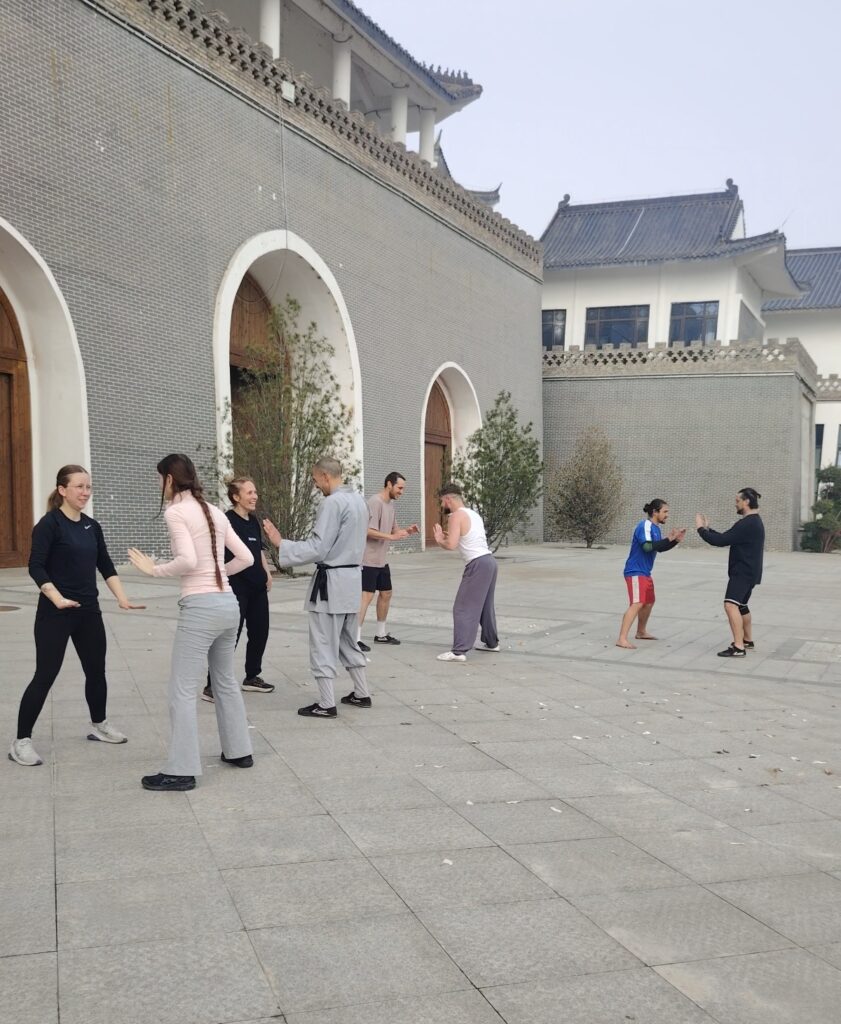
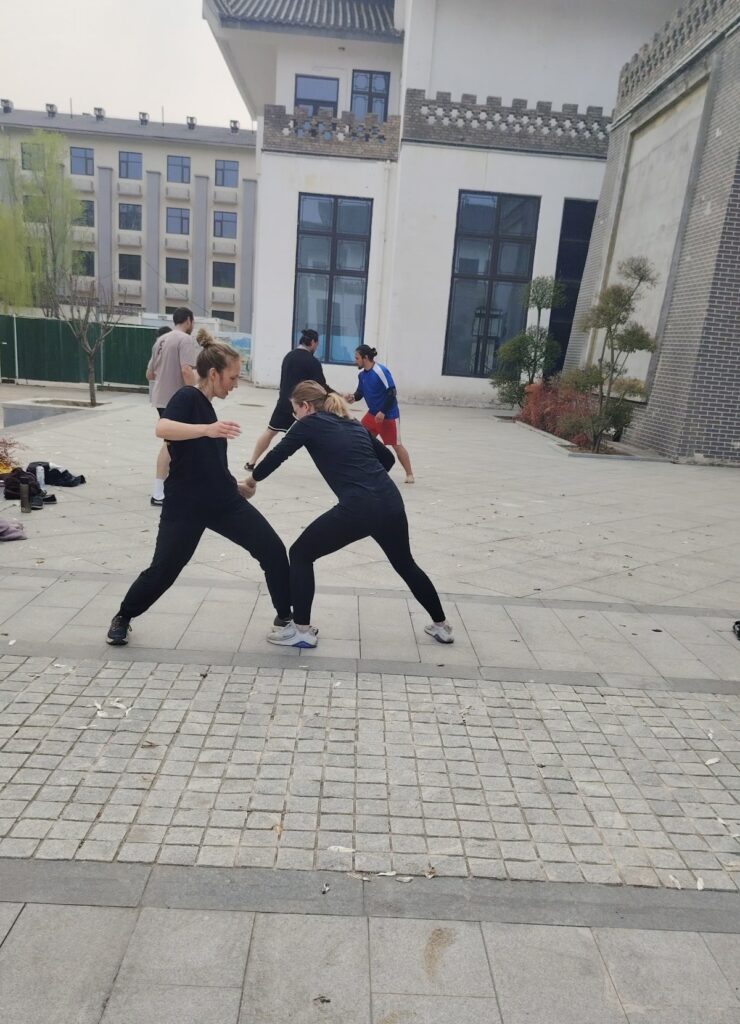
- Push Hands Training China: This is where theory meets reality. Through two-person Tuishou drills, you practice yielding, neutralizing, and effortlessly redirecting an opponent’s force under pressure.
A Day in the Life: What is the Training Schedule Actually Like?
The Reality Check: Serious Training, Not a Vacation
When you join us for tai chi training in China, you need to leave the idea of a leisurely holiday at the door. We operate a traditional academy, not a tourist resort. Our program is immersive and disciplined, designed for students who are ready to disconnect from city distractions and focus entirely on self-improvement.
You should expect a rigorous routine. We train Monday through Friday from 6:00 AM to 6:00 PM, with a half-day on Sunday. This amounts to over six hours of dedicated practice daily. It is a challenge, but it is accessible to anyone with the will to learn. You can check our detailed Kung Fu training curriculum and schedule to understand the specific flow of our weeks.
Morning Routine: Awakening the Qi
The day begins early at 6:00 AM. Before breakfast, we focus on waking up the body and mind with fresh air and stillness.
- Qigong & Breathing: We start with internal energy work to cultivate Qi.
- Ba Duan Jin: Gentle stretching exercises prepare your joints and muscles for the day.
- Conditioning: Light jogging or stamina training ensures you are physically ready for the technical sessions ahead.
Mid-Day Focus: Mechanics and Forms
The core of the day is dedicated to technical mastery. This is where we break down the movements of Tai Chi and Shaolin Kung Fu.
- Form Practice: You will drill specific forms, focusing on the precision of every stance and transition.
- Internal Mechanics: We teach the principle of “softness overcoming hardness,” showing you how to generate power without brute force.
- Philosophy Talks: Understanding the why is just as important as the how. We discuss Chan Buddhism and the heritage of the Shaolin Temple to give context to your physical movements.
Evening Wind Down: Culture and Restoration
After a full day of physical exertion, the evenings are for mental cultivation and recovery. We believe that a complete martial artist must also be culturally literate and mentally calm.
- Meditation: Guided Chan meditation helps settle the mind and integrate the day’s training.
- Cultural Classes: We offer Mandarin language lessons, Chinese calligraphy, and Taoism studies.
- Rest: The schedule is demanding, so getting adequate sleep is a mandatory part of the process.
Logistics for International Students: The Practical Steps
Making the leap to train in China is a big decision, and the logistics can feel overwhelming if you don’t have the right info. We handle these details daily, so let’s break down exactly what you need to know to get here smoothly.
Navigating the Visa Process
For most US citizens coming for Tai Chi training in China, getting the right visa is step one. We assist all our students with the necessary paperwork, but you need to know the difference between the two main types.
- X2 Visa (Short-term Study): This is the ideal choice for students planning to train for up to 180 days. To get this, we provide an official admission letter (JW202 form) once you register. It signals to the consulate that you are here for serious study.
- L Visa (Tourist): If you are coming for a very short retreat (under 30 days) or plan to travel extensively before/after training, a tourist visa might be easier. However, for dedicated training, the X2 is safer and more appropriate.
Important: Always check the current requirements at your local Chinese consulate, as rules can shift. We guide you through getting the invitation letter to ensure your application is solid. For a deeper dive into what you need, check our guide on the requirements for foreigners to learn Kung Fu in China.
Breaking the Language Barrier
A common fear is: “I don’t speak Mandarin, how will I learn?” You don’t need to worry. We specialize in teaching international students.
- Bilingual Masters: Our lead instructors have experience teaching Westerners and understand how to explain complex internal concepts in English.
- Translators on Site: For deeper philosophical discussions or specific corrections, we have translators available to bridge any gaps.
- Mandarin Classes: As part of the curriculum, we often include basic Mandarin lessons so you can navigate daily life and understand the terminology of your practice better.
Accommodations and Diet: What “All-Inclusive” Means
When you book a martial arts academy accommodation with us, we aim to remove all distractions so you can focus entirely on training. “All-inclusive” generally covers your training, room, and board.
Living Arrangements:
Most students choose between a private room or a shared room (usually two people). The rooms are simple, clean, and equipped with essentials like Wi-Fi, air conditioning/heating, and private bathrooms. It’s comfortable, but remember, this is a place of study, not a luxury resort.
Fueling Your Training:
The food is a highlight for many. We serve healthy, local Chinese dishes designed to fuel rigorous training.
| Meal Type | Description |
|---|---|
| Breakfast | Usually congee, steamed buns (mantou), eggs, and soy milk. |
| Lunch & Dinner | Several dishes served family-style with rice. Lots of stir-fried vegetables, tofu, and lean meats. |
| Dietary Needs | We easily accommodate vegetarian and vegan meal plans. The local diet is naturally heavy on fresh vegetables and tofu, making it easy to eat clean. |
If you are curious about who else is training here and what the vibe is like, take a look at our students’ photos to see the living and training environment firsthand.
Choosing Your Path for Tai Chi Training China
When you travel to us for Tai Chi training in China, your first step is deciding how deep you want to go. We structure our programs to fit your schedule and goals, whether you are looking for a quick mental reset or a hardcore, life-changing journey.
Short-Term Bootcamp (1-4 Weeks)
If you have limited time but want a genuine martial arts retreat in China, our short-term bootcamps are the perfect starting point. This track is designed specifically for beginners.
- Mental Reset: Step away from the daily grind, unplug, and focus entirely on your physical and mental health.
- Core Foundations: Learn the essential stances, breathing techniques, and forms. Developing proper leg flexibility and basic skills early on sets the stage for your entire practice.
- Cultural Orientation: Get a fast but meaningful introduction to Daoist martial arts philosophy and the roots of internal martial arts training.
Long-Term Mastery Tracks (1-12 Months)
For those ready to truly commit, our long-term tracks deliver a complete transformation. This is where you dive into full-time Tai Chi courses and live the life of a dedicated martial artist.
- Comprehensive Training: Master complex forms, weapon routines, and advanced push hands training in China.
- Physical Conditioning: Push your body to its absolute limits daily. For those wanting to combine internal energy with external power, pulling elements from our intense Shaolin warrior training programs builds incredible physical resilience.
- Duanpin System Certification: Put in the hard months, pass the formal evaluations, and return home with official, state-recognized credentials proving your rank and dedication to the art.
Frequently Asked Questions About Tai Chi Training China
If you are planning to travel from the US to train with us, you probably have some logistical questions. Here are the most common questions we get from international students preparing for our full-time Tai Chi courses.
How do I get a Chinese martial arts visa?
Getting your visa is a straightforward process. Once your booking is confirmed, we issue an official invitation letter to support your application.
- Short-Term Stays (1-4 Weeks): Most students use a standard L (Tourist) visa.
- Long-Term Stays (1-12 Months): You will need an X2 (Study) visa.
Take our official invitation letter to your local Chinese consulate or use a US-based passport and visa expediter to process the paperwork.
What should I expect daily in the training schedule?
Expect a serious, rigorous routine designed to build real skill. A typical day includes 6 or more hours of active practice.
- Morning: Early wake-up focusing on Qigong, stretching, and internal breathing exercises.
- Mid-Day: Intensive form practice, body mechanics, push hands, and combat applications.
- Evening: Active recovery, meditation, philosophy talks, and beginner Mandarin classes.
Are there language support and accommodations for international students?
Yes. We completely remove the friction of living abroad so you can focus entirely on your training. Our facilities include comfortable martial arts academy accommodation, offering both private and shared room options. Your stay includes an all-inclusive meal plan with heavy emphasis on healthy, locally sourced food, including vegan and vegetarian options. To eliminate the language barrier, we provide bilingual masters and dedicated translators for every class during your Tai Chi retreat.
What styles of Tai Chi will I learn?
Our core curriculum is built on the pillars of internal martial arts. You will train heavily in traditional Chen style Tai Chi, known for its explosive power and lower stances, alongside the foundational Yang style. We don’t just teach the outer movements; we teach the internal mechanics, Qigong, and the direct martial applications behind every posture.
Is Shaolin Temple Center in Handan officially recognized?
Absolutely. We are a fully certified and officially recognized institution. When you learn Tai Chi in China at our Handan center, you are not visiting a tourist trap. You are training under authentic Tai Chi masters from a direct, verified lineage in the true historical birthplace of the art.