


Shaolin Monks Today Life Training
Shaolin Monks Today: Beyond the Movie Image
Most people picture Shaolin monks as superhuman fighters who never smile, never eat much, and only train Kung Fu on mountain tops. In reality, Shaolin monks today are:
- Buddhist Shaolin monks who live by monastic rules
- Highly trained in Shaolin Kung Fu and Shaolin qigong
- Also navigating smartphones, tourists, and modern China
They are not comic book heroes. They are Chinese Shaolin monks balancing tradition, religion, and real life.


Modern Role Of Shaolin Monks In China And Worldwide
Today, Shaolin monks in China play several roles at once:
- Religious role – chanting, meditation, studying Chan (Zen) Buddhism
- Cultural role – preserving Shaolin Temple China heritage and traditional Chinese martial arts
- Educational role – teaching Shaolin monks training methods to students and visitors
- Public role – demonstrations, world tours, cultural diplomacy, online content
They serve as both Buddhist monks and cultural ambassadors for Shaolin around the world.
Traditional Image vs Real Shaolin Monks Today
What most people think vs what actually happens:
| Traditional Image | Real Shaolin Monks Today |
|---|---|
| Only meditate and fight all day | Pray, study, train, teach, manage temple responsibilities |
| Live cut off from society | Engage with tourists, media, and global students |
| Never use modern tech | Use phones, travel, work with organizations and schools |
| Pure “warrior monk” focus | Balance martial arts, religion, culture, and community |
The Shaolin monk lifestyle is disciplined and simple, but not frozen in history.
Balancing Legend, Religion, And Modern Life
Real modern Shaolin monks constantly balance three worlds:
- Legend – expectations from movies, internet myths, and stage shows
- Religion – core identity as Buddhist Shaolin monks rooted in Chan Buddhism
- Modern life – tourism, social media, global interest in Shaolin monks training
To stay authentic, they:
- Keep daily meditation and chanting as non‑negotiable foundations
- Treat Shaolin Kung Fu training as both self-defense and moving meditation
- Use modern tools (travel, media, partnerships) to protect and share Shaolin culture
This is who Shaolin monks today really are: not fantasy heroes, but disciplined monks of Shaolin working to keep an ancient tradition alive in a very modern world.
Historical origins of Shaolin monks
Shaolin monks started as simple Buddhist monks, not movie-style fighters. In the late 5th century, the Shaolin Temple was founded on Songshan Mountain in Henan, China, as a quiet place for meditation and scripture study. Early Chinese Shaolin monks focused on chanting, copying sutras, and basic physical work around the temple, living a disciplined, almost hidden life far from politics and fame.
The turning point came with Bodhidharma, the Indian monk often credited with bringing Chan (Zen) Buddhism to China. According to tradition, he taught seated meditation and simple movement practices to help monks stay awake, healthy, and focused. Over time, these early routines evolved into structured Shaolin Kung Fu training, blending internal calm with external power. This is the root of the Shaolin meditation routine and the “moving meditation” idea many people in the U.S. look for today.
Shaolin monks became known as warrior monks later, when they helped protect local communities and sometimes supported imperial armies. To survive bandits and political chaos, they developed stronger Shaolin monks training methods: strikes, kicks, weapons work, and group tactics built on discipline and teamwork. By the Ming and Qing dynasties, Shaolin Temple China had a serious reputation for both Buddhist practice and powerful martial arts. That warrior monk history still shapes how people see Shaolin monks today, and it’s the foundation behind modern programs that let you train with Chinese Shaolin monks in authentic temple-style settings.
Shaolin monks and Shaolin Temple in the modern era
Shaolin monks today live in a strange mix of old-school Buddhist discipline and modern China’s tourist economy. At Shaolin Temple Henan, you’ll see Chinese Shaolin monks chanting in ancient halls while tour groups film them on phones. The core is still Buddhist Shaolin monks practicing Chan, but the environment around them is fast, noisy, and commercial.
Daily life at Shaolin Temple Henan today
Shaolin monks in China follow a set rhythm every day:
- Early morning: meditation, chanting, simple Shaolin meditation routines
- Daytime: Shaolin Kung Fu training, scripture study, temple duties
- Evening: quiet practice, cleaning, rest, limited personal time
Most monks live simply: shared rooms, basic clothes, no luxury. Even with crowds outside, they keep a focused Shaolin monk lifestyle inside the monastery walls.
Tourism, commercialization, and cultural preservation
Tourism is huge at Shaolin Temple China. Shows, souvenirs, and big crowds bring money, but also pressure to “perform.” The way I look at it, commercialization is a trade-off:
- Pros: funds temple repairs, supports monks, spreads Shaolin culture worldwide
- Cons: risk of turning real training into “Shaolin monks show” for tourists
A lot of monks and temple leaders work hard to protect the real heart of Chan Buddhism at Shaolin, keeping serious practice behind the scenes while using tourism to support long-term cultural preservation. If you want to understand that deeper, the breakdown of Shaolin Temple meditation and culture is a solid place to start.
Difference between Shaolin wénsēng and wǔsēng monks
At Shaolin Temple Henan, there are basically two main paths:
| Type Of Shaolin Monk | Chinese Term | Main Focus | What They Do Daily |
|---|---|---|---|
| Scholarly monks | wénsēng | Study and teaching | Buddhist texts, Chan philosophy, temple rituals |
| Martial monks | wǔsēng | Shaolin monks training | Shaolin Kung Fu training, demos, some teaching |
Both are real monks of Shaolin, but wénsēng lean more into scripture and ceremony, while wǔsēng carry the warrior monk history and martial arts side. The balance between these two roles is what keeps Shaolin Temple Henan both a living monastery and a world-famous martial arts center.
Daily Life Of Shaolin Monks Today
Shaolin monks today live on a tight schedule. A typical Shaolin monk daily routine starts before sunrise with wake-up, washing, and silent walking to the courtyard. From there, the day runs in clear blocks: early Shaolin meditation routine and chanting, morning Shaolin Kung Fu training, simple vegetarian meals, Buddhist study, then more Shaolin monks training in the afternoon before evening chanting and lights out.
Shaolin Monk Daily Schedule & Routine
A modern Shaolin monk lifestyle is highly structured and disciplined:
- Around 5:00 AM: Wake up, light washing, quiet reflection
- Early morning: Group chanting and seated Chan Buddhist meditation
- Morning: Shaolin Kung Fu basics, stance work, forms, conditioning
- Midday: Vegetarian meal in silence, chores, temple work
- Afternoon: More Shaolin Temple China training, stretching, weapons basics
- Evening: Chanting, scripture study, personal meditation, rest
This kind of consistent Shaolin monk daily routine is what builds real discipline, not just performance skills.
Meditation, Chanting & Buddhist Study
Buddhist Shaolin monks are not just fighters; they are first and foremost monks. Every day includes:
- Seated Chan meditation to calm the mind and watch thoughts
- Group chanting of sutras to build focus, rhythm, and community
- Study of Buddhist texts, precepts, and ethics with senior Chinese Shaolin monks
For monks of Shaolin, meditation and chanting are treated like “internal training” for the mind, just as important as physical Shaolin monks training for the body.
Diet, Discipline & Community Life
Daily life at Shaolin Temple Henan is simple and strict:
- Diet: Mostly vegetarian, light seasoning, no excess, and regular mealtimes
- Discipline: Clear rules about behavior, speech, phone use, and free time
- Community life: Shared dorms, group chores, and team practice build humility and respect
This tight structure is exactly why so many people look to Shaolin monks China as an example of focus and self-control. When I design Shaolin cultural immersion or training experiences for visitors, I model them on this real Shaolin monk discipline and routine, so people can feel a small piece of authentic daily life instead of just watching a show.
Shaolin monks training methods


Shaolin monks training is simple in theory, brutal in practice. The focus is on building real skill, not flashy tricks. When I talk with students in the U.S., what surprises them most is how much of Shaolin monks training comes down to repeating the basics with serious discipline.
Shaolin Kung Fu basics: stances, forms, movement
Shaolin Kung Fu starts with foundations, not flying kicks.
- Deep stances like mǎbù (horse stance) and gōngbù (bow stance) build leg strength, stability, and balance. You might hold these for minutes at a time until your legs shake.
- Basic punches, kicks, and footwork are drilled over and over to hard‑wire clean technique and body alignment.
- Forms (traditional combinations of movements) teach timing, rhythm, coordination, and how to link power from the ground up.
- For modern students, this kind of Shaolin monks training feels like a full lower‑body and core workout, plus real martial skill at the same time.
Shaolin qigong and internal energy work
Buddhist Shaolin monks don’t just train the body; they train breath and focus.
- Shaolin qigong practice uses slow movements, standing postures, and specific breathing patterns to build internal energy and calm the mind.
- Static holds strengthen tendons and joints, while breathing work improves endurance and recovery between intense sessions.
- For U.S. students under stress, these internal drills are often what improve sleep, focus at work, and long‑term joint health.
Sparring, weapons, and conditioning drills
Chinese Shaolin monks always connect training back to real application.
- Light to hard sparring teaches timing, distance control, and how to stay calm under pressure.
- Shaolin weapons training (staff, broadsword, straight sword, spear, and more) builds coordination, grip strength, and whole‑body power.
- Conditioning drills include pad work, partner drills, impact training, and progressive body toughening—always controlled, but demanding.
- If you want to feel what this type of Shaolin monks China training is like in person, programs built for international students, like the structured Kung Fu training curriculum and daily schedule, mirror how real monks drill basics, qigong, and sparring day after day.
Advanced Shaolin monks training and conditioning
When people talk about “advanced Shaolin monks,” they’re often thinking about superhuman skills. In reality, advanced Shaolin monks training blends brutal conditioning with deep internal work so Chinese Shaolin monks can perform at a high level for decades, not just a few years.
Internal vs external Shaolin monks practice
Buddhist Shaolin monks don’t just chase muscle and power. Their training balances:
- External training: explosive Shaolin Kung Fu forms, Shaolin weapons training, high-impact kicks, and fast combinations that build speed, coordination, and impact resistance.
- Internal training: Shaolin qigong practice, breathing drills, stance work, and slow “silk-reeling” style movements that train joints, tendons, and the nervous system.
In advanced stages, internal and external work merge. A monk’s power looks relaxed on the outside, but it’s fully connected from the ground, through the core, out to the hands.
Traditional 72 arts and extreme conditioning
The legendary “Shaolin 72 arts” are specialized methods for toughness, accuracy, and control. While not every modern Shaolin monk trains all of them, the mindset is still the same: progressive, targeted conditioning over many years. Examples include:
- Iron body and iron palm conditioning with gradual impact training
- Finger, grip, and forearm training for claw-style techniques
- Balance and acrobatic drills on narrow beams or uneven terrain
Advanced Shaolin monks today treat these methods like a serious long-term project, not a stunt. It’s structured, progressive, and grounded in safety and recovery.
Strength, flexibility, and endurance for Shaolin monks today
Modern Shaolin monks in China mix traditional Shaolin monks training with smart body mechanics:
- Strength: deep stances, repetitive low kicks, jumping drills, and bodyweight basics (pushups, squats, core) to build whole-body power
- Flexibility: daily split work, active stretches, and dynamic joint mobility; legs and hips are trained hard for high kicks and low stances. For example, methods similar to those in this guide on leg flexibility and basic Shaolin skills are standard.
- Endurance: long forms, repeated combinations, hill sprints, and stance holds that demand both cardio and mental grit
At the highest levels, monks refine power delivery, rooting, and whole-body connection, similar to how advanced forms are approached in discussions of the highest levels of Shaolin Kung Fu. The result is a Shaolin monk lifestyle that looks extreme from the outside but is built step by step: disciplined work, careful progression, and a clear purpose behind every drill.
Spiritual Life Of Buddhist Shaolin Monks
The spiritual life of Buddhist Shaolin monks is built on Chan (Zen) Buddhism, strict precepts, and day‑to‑day discipline. Even today, Chinese Shaolin monks treat every part of life—training, eating, resting—as practice. Their goal isn’t just to fight well; it’s to see clearly, reduce ego, and live with compassion and responsibility.
Chan Buddhism Meditation In Shaolin Monk Practice
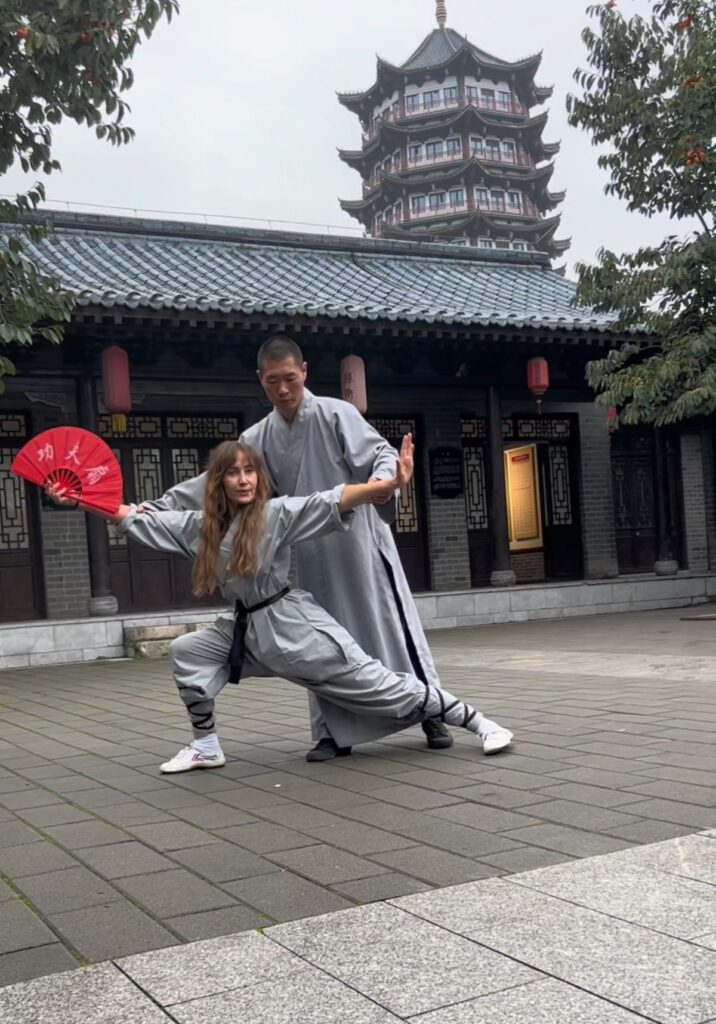

For Buddhist Shaolin monks, Chan meditation is non‑negotiable. A typical Shaolin monk daily routine includes:
- Seated meditation to calm the mind, watch the breath, and see thoughts without chasing them.
- Chanting sutras to build focus, gratitude, and a sense of shared purpose.
- Mindful walking between halls or training areas, using each step to come back to the present moment.
This steady meditation routine supports everything else: better control in Shaolin Kung Fu training, more patience in community life, and a calmer response to stress—something many of us in the US can directly learn from.
How Shaolin Monks Use Kung Fu As Moving Meditation
Shaolin monks training is not just about high kicks and power. Real Shaolin Kung Fu is “moving meditation”:
- They link breath with every stance, strike, and step.
- Forms are done with full attention, feeling weight, balance, and timing.
- When focus drifts, they bring it back to the body, just like in seated meditation.
For modern students, this style of Shaolin Kung Fu training becomes a practical way to manage anxiety, clear the mind after work, and stay present—especially if you prefer movement over sitting still.
If you want a real taste of this moving meditation, an on‑site program like the authentic Shaolin Kung Fu training in China shows exactly how monks blend technique with mindfulness.
Core Values, Precepts, And Ethics Of Shaolin Monks
Behind the famous Monks of Shaolin, there is a clear ethical code. Traditional Chinese Shaolin monks follow core Buddhist precepts and Shaolin‑specific rules, including:
- Compassion and non‑harm: Use skill to protect, not bully or show off.
- Discipline and simplicity: Limit distractions, keep schedules, respect hierarchy.
- Honesty and responsibility: Speak truthfully, own mistakes, support the temple community.
- Respect for teachers and lineage: Treat Shaolin martial arts philosophy as a trust to pass on, not a quick product.
For anyone in the US balancing work, family, and health, this Shaolin monk lifestyle offers a clear model: fewer excuses, more structure, and daily habits that line up with your values instead of fighting them.
Health, mindset, and benefits of Shaolin monks training
Shaolin monks training is not about showing off; it’s about building a strong body and a tougher mind at the same time. Chinese Shaolin monks train to stay calm under pressure, think clearly when stressed, and keep their bodies mobile and powerful as they age. For anyone in the U.S. dealing with long workdays, sitting too much, and constant digital distraction, the Buddhist Shaolin monks approach is surprisingly practical.
Shaolin monks approach to pain, fear, and mental toughness
Shaolin monks today treat pain and fear as teachers, not enemies. In hard drills, they:
- Use breathing to stay relaxed while the body is under stress
- Face fear in small, controlled steps instead of avoiding it
- Focus on the task (the next strike, the next stance), not the story in their head
This style of Shaolin monks training builds quiet confidence. You learn you can handle more than you thought, without needing to be “tough” in a loud way.
Shaolin training for physical health, posture, and longevity
Modern Shaolin monks China routines mix stretching, low stances, and qigong-style breathing. That combination:
- Opens tight hips, back, and shoulders from too much sitting
- Strengthens legs and core for better posture and joint health
- Improves circulation and lung capacity for long-term energy
For kids and teens, structured Shaolin martial arts can be a powerful way to build healthy habits early; you can see this in how programs focus on confidence and body awareness in martial arts for youth growth and development.
What we can learn from Shaolin monks discipline in daily life
You don’t need to be one of the monks of Shaolin to use their discipline. A simple, “Shaolin-style” approach could look like:
- Set a fixed daily movement block (10–20 minutes of stances, stretching, or walking)
- Do one thing at a time with full attention—work, eat, train, rest
- Keep small rules: no phone during practice, no skipping the warm-up, always finish the last rep
Shaolin monk lifestyle is really about consistency. A basic, honest routine—done every day—will beat bursts of motivation every time.
Training With Shaolin Monks in China
If you’ve ever wanted real Shaolin monks training in China, you can actually do it—and it’s more structured and beginner‑friendly than most people think.
How to Visit Shaolin Temple and Train With Monks
If you’re flying from the U.S., you’ll usually land in Beijing or Shanghai, then connect to Zhengzhou and drive to Shaolin Temple Henan on Songshan Mountain. Most people don’t just “walk in” and ask to train. Instead, they:
- Apply in advance through a dedicated Shaolin training center or school linked to Shaolin Temple China
- Arrange visas, airport pickup, and local transport as a package
- Get help setting up Chinese payment apps using guides like this Alipay and WeChat tutorial for foreigners in China
Planning this way keeps your Shaolin monks China trip focused on training, not scrambling for logistics.
Types of Shaolin Training Programs for Foreigners
Most authentic programs designed for U.S. visitors and beginners include:
- Short retreats (1–2 weeks): intro to Shaolin Kung Fu training, qigong, and basic forms
- Monthly stays: deeper Shaolin monk daily routine with more conditioning, stretching, and stance work
- Long-term programs (3–12+ months): for serious students who want real Chinese Shaolin monks discipline and progression through traditional forms and weapons
If you’re just starting, look for beginner tracks, clear schedules, English support, and a strong link to Buddhist Shaolin monks culture—not just a stage performance school. A good starting point is comparing options like the best Kung Fu schools in China for foreigners.
What to Expect From an Authentic Shaolin Experience
An authentic monks of Shaolin experience isn’t a spa retreat—it’s simple, structured, and physical:
- Early mornings with stretching, basic forms, and stance training
- Strong focus on posture, breathing, and Shaolin qigong practice
- Simple dorm rooms, basic food, and a quiet Shaolin monk lifestyle
- Clear rules, respectful behavior, and a lot of repetition to build real skill
If you go in expecting movie-style flying kicks all day, you’ll be disappointed. If you go in ready to sweat, follow the Shaolin meditation routine, and respect the culture, training with Shaolin monks today can be one of the most powerful discipline resets you’ll ever experience.
Shaolin Temple Center China and Authentic Shaolin Lineage


Shaolin Temple Center China is directly connected with Songshan Shaolin Temple in Henan, the historic home of Chinese Shaolin monks. I work with teachers who trained under recognized Shaolin masters, so the Shaolin monks training you get here follows real temple standards, not a performance-school version built for tourists.
Real Shaolin Monks Training Method
At Shaolin Temple Center China, we follow the same structure Buddhist Shaolin monks use in China today:
- Foundations first: stance work, basic Shaolin Kung Fu forms, footwork, and conditioning before anything fancy.
- Internal + external: hard Shaolin conditioning, plus Shaolin qigong practice and breathing so you build power without wrecking your body.
- Mindset: discipline, focus, and simple Chan-style meditation built into every session, not treated as an add-on.
If you’re more interested in internal arts and a softer entry point, we also guide students who want to learn Tai Chi in China with traditional masters, then blend it with Shaolin basics over time.
Who Our Programs Are Best For
Shaolin Temple Center China programs are built for:
- Adults from the US who want an authentic Shaolin experience without wasting time on show-style schools.
- Beginners who need clear structure, patient coaching, and a safe way to test real Shaolin monk discipline.
- Martial artists who already train and want to go deeper into traditional Chinese martial arts, Shaolin weapons training, and real internal–external practice.
If you want to train with Shaolin monks in China in a serious, no-gimmick way—and still have clear support as a foreigner—this is exactly who we designed these programs for.
Myths vs reality about Shaolin monks
Common myths about Shaolin monks today
When people in the U.S. talk about Shaolin monks today, most of what they picture comes from movies, TikTok, and old Kung Fu shows. A few big myths keep showing up:
- That Chinese Shaolin monks are “superhuman,” immune to pain and injury
- That every monk at Shaolin Temple China is a full-time fighter who trains 10+ hours a day
- That Buddhist Shaolin monks only do wild flips and stunt-style Shaolin Kung Fu training
- That real monks can break anything with their heads or bodies on command, anytime
These myths make Shaolin look cool, but they hide what real monks actually do and believe.
What Shaolin monks can and cannot really do
Real Shaolin monks training is serious, but it’s still human:
- They can build extreme conditioning, flexibility, and power with long-term Shaolin qigong practice and forms
- They can take hits better than most people because of progressive impact training and breath control
- They can’t ignore physics or biology: bones can still break, joints still injure, and fatigue is real
- They don’t live off “mystic powers”; their skill comes from years of disciplined work, meditation, and lifestyle
Modern Shaolin monks in China are impressive athletes and committed Buddhist practitioners, not movie superheroes.
Spotting authentic Shaolin monks training vs fake shows
If you want to tell real Shaolin monk lifestyle and training from a staged show, watch for:
- Focus: real monks look calm and present, not like they’re only playing to the crowd
- Content: authentic training includes basics, stance work, forms, conditioning, and partner drills, not just tricks
- Context: serious programs often mix Shaolin meditation routine, qigong, and Kung Fu together, not just “circus” skills
- Teaching: real lineages explain body mechanics, breath, and mindset, not just “watch and copy”
When you see programs that balance traditional Chinese martial arts, internal work, and step-by-step basics (like when Taijiquan is taught from stiffness to softness, as in this breakdown of beginners Taijiquan from rigidity to flexibility), that’s a good sign you’re closer to authentic Shaolin practice, not just a tourist show.
Modern challenges for Shaolin monks today
Shaolin monks today live in a strange mix of temple life, smartphone culture, and global tourism. At Songshan Shaolin Temple in Henan, Chinese Shaolin monks face real pressure to perform shows, film videos, and welcome crowds, while still keeping a serious Buddhist Shaolin monks practice. That means dealing with cameras in their faces during meditation, tight performance schedules, and the constant pull of social media, even as they try to keep a simple Shaolin monk lifestyle.
To survive in this digital and tourist age, modern Shaolin monks have to balance three things every day:
- Tradition – real Shaolin Kung Fu training, Chan meditation, precepts, and temple rules
- Performance – demos, Shaolin monks training shows, travel teams, and media projects
- Spiritual practice – quiet time on the cushion, scripture study, and service in the temple
The future of Shaolin monks and Shaolin culture worldwide depends on how well they hold that line. When Shaolin Temple China and overseas centers keep training rooted in real Chan Buddhism and hard, traditional Chinese martial arts instead of only flashy stage tricks, the culture stays strong. My goal is to make sure that when you see or train with Monks of Shaolin—whether online, on tour, or in China—you’re getting authentic Shaolin monks training, real discipline, and real values, not just a costume and a show.