


Shaolin Kung Fu School Guide Authentic Training in China
The Core Curriculum: What You Will Learn
Entering a shaolin kung fu school can feel intimidating. You might worry if you have the fitness level to keep up or if the training is purely for show. At our Chinese martial arts academy, we strip away the Hollywood myths and focus on the authentic Shaolin Temple curriculum. We provide a structured path that balances explosive external power with calm internal focus. Whether you are here for a kung fu summer camp or a long-term residency, our training is designed to rebuild you from the ground up.
Traditional Martial Arts Forms (Taolu)
Kung Fu Forms (Taolu) are the soul of our practice. These sequences are more than just movements; they are a library of combat techniques passed down by Shaolin monks for centuries.
- Fundamental Stances: Build the “iron base” necessary for all traditional martial arts.
- Animal Styles: Learn the specific mechanics of the Tiger, Crane, Leopard, Snake, and Dragon.
- Coordination: Develop the seamless transition between defense and attack that defines an authentic Shaolin master.
Sanda Kickboxing Classes
For students interested in practical application, we integrate Sanda kickboxing classes. This is the modern face of Chinese combat, focusing on full-contact efficiency.
- Striking & Kicking: Master explosive combinations used in professional competition.
- Takedowns: Learn the unique “fast wrestling” techniques that set Sanda apart from Muay Thai.
- Sparring: Apply your skills in a controlled, high-intensity environment to build real-world confidence.
Weaponry Mastery
The Shaolin tradition includes the mastery of 18 traditional weapons. You will learn to treat the weapon as an extension of your own body.
- The Staff (Gun): Known as the “Father of all Weapons,” focusing on long-range strikes.
- The Broadsword (Dao): Emphasizing powerful, sweeping movements.
- Flexible Weapons: Advanced training in the nine-section whip or the chain whip for superior coordination.
Internal Power Cultivation
A true martial arts retreat in China is incomplete without the internal arts. We emphasize Qi Gong meditation and Tai Chi to balance the rigors of physical combat.
- Qi Gong: Focus on breathwork and internal power cultivation to increase vitality.
- Tai Chi: Develop fluidity and learn to use an opponent’s energy against them.
- Zen Buddhism Philosophy: Integrate mental clarity into your physical practice to reduce stress and improve focus.
Hard Kung Fu and Body Conditioning
To achieve the resilience of a warrior, we utilize traditional “Hard” Kung Fu methods. This is where martial arts discipline meets physical transformation.
- Power Stretching: Achieve the extreme flexibility required for high kicks and low stances.
- Conditioning: Toughen the hands, shins, and torso through repetitive impact training.
- Endurance: High-repetition drills designed to push your cardiovascular limits and forge mental fortitude.
A Day in the Life: The Discipline of a Shaolin Student
Life at our shaolin kung fu school is defined by a rigorous structure that transforms both the body and the mind. We don’t just teach movements; we instill a lifestyle rooted in centuries of tradition. Every hour of the day is calculated to maximize your potential and build the martial arts discipline required for true mastery.
The Morning Bell and Flexibility
The day begins at 5:30 AM with the sound of the morning bell. We start with fundamental flexibility training and stamina building before the sun is fully up. This early session focuses on opening the joints and preparing the muscles for the high-impact work ahead. It is the foundation of all Traditional Martial Arts practiced here.
Training Intensity: Morning, Afternoon, and Evening Sessions
Our curriculum is split into three intensive blocks to ensure a well-rounded education in Chinese combat and philosophy:
- Morning: Focus on Kung Fu Forms (Taolu) and basic techniques to perfect posture and flow.
- Afternoon: High-intensity power training, including Sanda kickboxing classes and application drills.
- Evening: Refining skills and specialized weaponry practice.
Understanding the daily life and training of Shaolin monks helps our students mentally prepare for this level of physical commitment. We push you to your limits, but the progress you see in just a few weeks is undeniable.
The Shaolin Diet and Monastic Nutrition
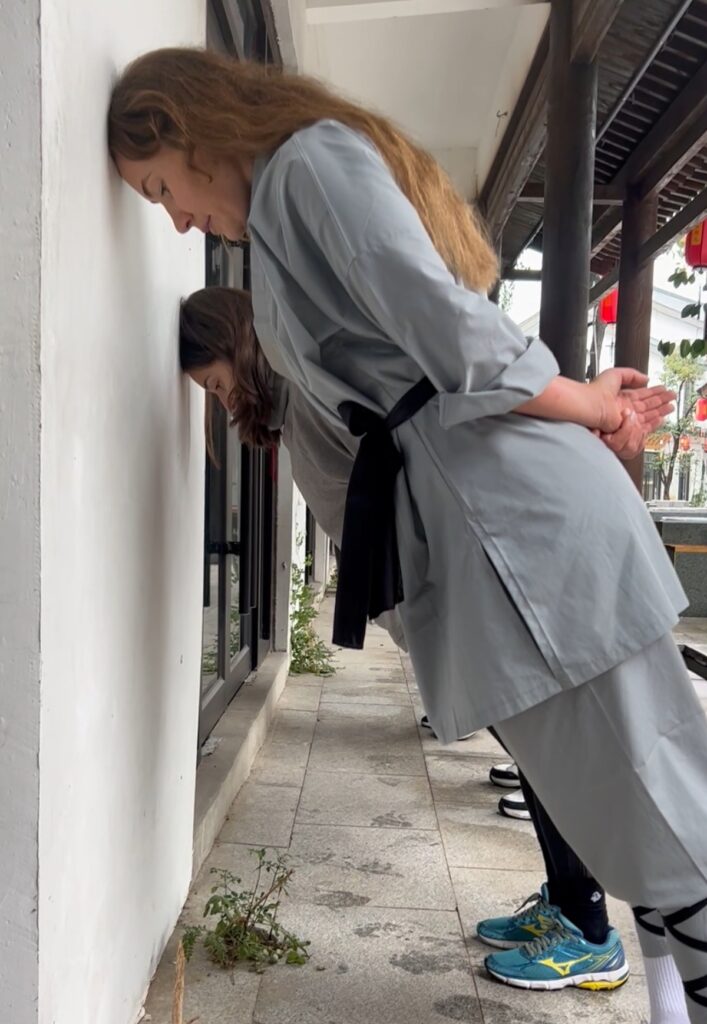
We provide a balanced, monastic-style diet designed to fuel recovery. Meals are primarily vegetarian, focusing on high-protein grains, fresh vegetables, and legumes. This clean eating approach supports the internal power cultivation necessary for long hours of training and ensures your body has the nutrients to repair itself overnight.

Evening Reflection and Mandarin Study
The day doesn’t end when the physical training stops. We dedicate time in the evening to Qi Gong meditation and Zen reflection to calm the mind. To help international students fully integrate into the culture of our Chinese martial arts academy, we also provide Mandarin language study. This allows you to communicate with the masters and understand the deeper nuances of the Zen Buddhism philosophy that guides our practice.
Mental and Physical Benefits of a Shaolin Kung Fu School
Training at our shaolin kung fu school offers a level of immersion that goes far beyond a standard gym workout. We focus on a holistic transformation that rebuilds you from the ground up, combining high-intensity physical drills with ancient internal practices.
Physical Transformation: Strength and Flexibility
The physical demands of Traditional Martial Arts produce a body that is both lean and incredibly powerful. You won’t just build “show muscle”; you will develop functional strength, explosive speed, and elite-level coordination. We place a massive emphasis on foundational movements, teaching students how to train leg flexibility and basic skills to ensure every strike and stance is technically perfect.
| Benefit Area | Impact On The Body |
|---|---|
| Core Strength | Stabilizes the spine and powers explosive kicks. |
| Flexibility | Increases range of motion and prevents training injuries. |
| Endurance | High-rep Kung Fu Forms (Taolu) build superior cardio. |
Mental Fortitude and Building Chi
True mastery requires more than just physical prowess. Our curriculum focuses heavily on Internal Power Cultivation. Through daily Qi Gong Meditation, you learn to harness your “Chi” (internal energy), which improves focus and mental resilience. This discipline helps you push past physical limits, building a mindset of “never giving up” that carries over into your professional and personal life back home.
Stress Reduction through Zen Buddhism Philosophy
In the heart of Henan Province Kung Fu culture, we integrate Zen Buddhism Philosophy into every aspect of training. This isn’t just about fighting; it’s about finding stillness in motion. By adopting the lifestyle of Shaolin Monks, you strip away the digital noise and stress of modern life. This immersive environment acts as a mental reset, providing clarity and emotional balance through disciplined practice and mindfulness.
Cultural Immersion in Henan Province
Living and breathing the culture where Kung Fu was born provides a perspective you can’t get anywhere else. You aren’t just a student; you are part of a 1,500-year-old lineage. This deep cultural connection fosters a sense of belonging and respect for the history of the arts, making your journey at a shaolin kung fu school a life-changing experience rather than just a training trip.
Choosing an Authentic Shaolin Kung Fu School in China
Selecting the right shaolin kung fu school is the most critical decision you will make on your martial arts journey. With so many options in China, you need to look past flashy marketing and focus on the roots of the practice. An authentic experience requires a direct connection to the temple’s heritage and a commitment to traditional martial arts standards.
Lineage and Authentic Shaolin Masters
The quality of your training depends entirely on your teacher. We ensure our students learn from an Authentic Shaolin Master who holds a verifiable lineage. These masters aren’t just instructors; they are practitioners who have lived the monastic life and mastered the Shaolin Temple curriculum.
- Direct Lineage: Masters should be 32nd, 33rd, or 34th generation disciples.
- Teaching Experience: Look for schools that have a history of training international students.
- Skill Depth: A true master excels in both external forms and internal power cultivation.
Facilities vs. Traditional Training Atmosphere
Don’t be fooled by five-star amenities. A real kung fu school focuses on the “bitter training” (Chi Ku) philosophy. While we provide clean, safe, and comfortable housing, the training grounds are designed for grit and discipline.
| Feature | What To Look For | Why It Matters |
|---|---|---|
| Training Area | Outdoor and indoor mats/fields | Develops adaptability and toughness. |
| Living Quarters | Simple, clean, and communal | Fosters a focused, distraction-free environment. |
| Support Staff | English-speaking translators | Essential for understanding complex movements. |
Significance of Location in Henan Province
The location of your shaolin school impacts your mindset. Training in Henan Province, specifically near the Songshan Mountain range, places you at the epicenter of Kung Fu history. This proximity allows for regular visits to the original temple and immersion in the local culture that birthed these arts. For those ready to commit, understanding the Shaolin Temple training in China for foreigners helps bridge the gap between Western expectations and Eastern reality.
International Student Support Systems
A reputable school must provide a robust support system for foreigners. This includes:
- Visa Assistance: Helping you navigate the paperwork for long-term stays.
- Logistics: Airport pickups and local orientation.
- Cultural Integration: Mandarin classes and lessons in Zen Buddhism philosophy to provide context to your physical training.
Practical Requirements for Your Shaolin Kung Fu School Journey
Joining a shaolin kung fu school in China is a major commitment that requires specific preparation. We make the transition as smooth as possible for international students, regardless of their current athletic starting point.
Skill Level and Physical Readiness
Our Chinese martial arts academy is open to everyone. Kung fu training for beginners starts with the basics—flexibility, balance, and fundamental stances. If you are more experienced, our authentic Shaolin masters will push you through advanced kung fu forms (Taolu) and high-intensity Sanda kickboxing classes. We tailor the intensity to your current capabilities while ensuring constant progression.
Visa and Logistics for China
Navigating international travel requires attention to detail. It is essential to review the requirements for foreigners to learn kung fu in China to secure the correct visa and travel documents. We provide the necessary invitation letters and enrollment documentation to support your application once your training dates are confirmed.
Packing Essentials for Rigorous Training
| Category | What To Bring |
|---|---|
| Footwear | Multiple pairs of thin-soled training shoes (Feiyue brand is the local standard). |
| Apparel | Durable, loose-fitting athletic wear; we also provide traditional uniforms. |
| Personal Care | High-quality sunscreen, muscle liniment, and a basic personal first aid kit. |
| Electronics | A reliable power adapter (Type A, C, or I) and a VPN for staying connected. |
Age and Health Considerations
While there is no strict age limit at our shaolin school, martial arts discipline requires a baseline level of physical health. We have successfully trained students ranging from young children in kung fu summer camps to seniors focusing on internal power cultivation. We incorporate Qi Gong meditation to help all students manage the physical load while building lasting strength and mental clarity.
Why Shaolin Temple Center China is Your Destination for Mastery
Choosing the right shaolin kung fu school is the most critical decision in your martial arts journey. At Shaolin Temple Center China, we don’t just teach movements; we provide a direct connection to a 1,500-year-old lineage. Our center serves as a premier Chinese martial arts academy where the ancient traditions of the Shaolin Temple are preserved with absolute integrity.
Preserving 1,500 Years of Heritage
We take our role as protectors of traditional martial arts seriously. Every authentic Shaolin master at our facility has undergone years of rigorous monastic training, ensuring that the techniques passed down to you are undiluted. You aren’t just practicing a sport; you are immersing yourself in a living history that combines physical prowess with Zen Buddhism philosophy.
Personalized Training Programs
We recognize that every student arrives with unique goals and physical capabilities. Our approach is never “one size fits all.” We offer tailored instruction that scales to your specific needs:
- Kung fu training for beginners: Focusing on fundamental stances, flexibility, and basic kung fu forms (taolu).
- Advanced Warrior Paths: Intensive Shaolin warrior program training for those looking to master complex weaponry and high-level combat.
- Internal Focus: Dedicated sessions for Qi Gong meditation and internal power cultivation to balance the body’s energy.
Ancient Wisdom Meets Modern Physical Education
Our curriculum is designed to bridge the gap between ancient monastic discipline and modern physical standards. We provide a balanced environment where the explosive power of Sanda kickboxing classes meets the mental clarity found in Shaolin temple meditation culture.
- Holistic Development: We focus on building martial arts discipline that carries over into your professional and personal life.
- Scientific Conditioning: While our methods are traditional, we apply modern understanding of recovery and nutrition to ensure your body stays resilient during your stay in Henan Province.
- Cultural Depth: Training here offers a deep dive into the philosophy that makes Shaolin the world’s most respected martial arts tradition.
Common Shaolin Kung Fu School FAQs
We understand that traveling to China for training is a big step. Here are the most common questions we receive from students looking to join our shaolin kung fu school.
How long should I stay for effective training?
The duration depends on your personal goals. A short stay of one to four weeks is great for a Kung Fu Summer Camp experience or a basic introduction. However, to see a real transformation in your skills, most students find that staying for three months or longer is ideal. You can find more details on how long it takes to learn Shaolin Kung Fu to reach different mastery levels on our dedicated guide.
Do I need to speak Chinese to join?
No prior knowledge of Mandarin is required. Our Chinese Martial Arts Academy is fully equipped to support international students. Instructors use a mix of English and physical demonstration, and the daily Martial Arts Discipline helps you learn the necessary terminology quickly through repetition.
Is there an age limit for international students?
We accept students of almost all ages. We offer specialized programs for children and teens, while adults often focus on a mix of Kung Fu Forms (Taolu) and Qi Gong Meditation. As long as you are in good health and ready to work hard, you are welcome at our school.
What is the difference between traditional Kung Fu and Sanda?
It comes down to application:
- Traditional Kung Fu: Focuses on the Shaolin Temple Curriculum, including historical forms, flexibility, and Internal Power Cultivation.
- Sanda Kickboxing Classes: This is the modern combat sport of China. It focuses on practical fighting techniques, including punches, kicks, and throws, emphasizing speed and power.
Can beginners join the school?
Absolutely. Most of our international students start as total beginners. Our shaolin kung fu school structures classes so that you build a foundation in basic stances and flexibility before moving on to advanced techniques.